

Konstantin Singer is 36 years old, works full-time at Mercedes on infotainment apps – and built Zenbox on the side in 12 months. A “Physical App-Blocker”, a digital detox device for 49.90 euros. No subscription, no account, completely offline.
The special part: Konstantin had no hardware experience before and used AI (Cursor) to develop the iOS app. First B2B customer secured, goal for year two: 100,000 euros revenue. A story about doom scrolling, sleepless nights, LinkedIn virality, and the courage to start a hardware project alone.
This is a summary of Episode 151 of the “Happy Bootstrapping” Podcast (German).
From Doom Scrolling to Physical App-Blocker
The idea for Zenbox arose from pure desperation. Konstantin’s daughter was two years old and slept extremely poorly. “She was up three, four times a night,” he recalls. As a father with US projects, he was often awake at 3 AM, checking “just quickly” an email – and ended up doom scrolling.
“In the end, I was always doom scrolling. At the same time, I needed my phone to fall back asleep with podcasts or music.”
A classic dilemma: putting the phone away doesn’t work, but the distraction robs sleep.
Konstantin researched app blockers – all bypassable. Then he found “Brick”, a US device that he didn’t like. “At the time, the USA tariff discussions were also starting,” he says pragmatically. So he built it himself.
A friend recommended Cursor, an AI tool for developers. “After three hours, I already had a prototype that had the general functions – still without the physical device.” The first prototype was a magnet with an NFC chip. “Then it was like a vortex. I programmed nights in a row until three, four in the morning.”
The Product: Hardware + Software Without Subscription
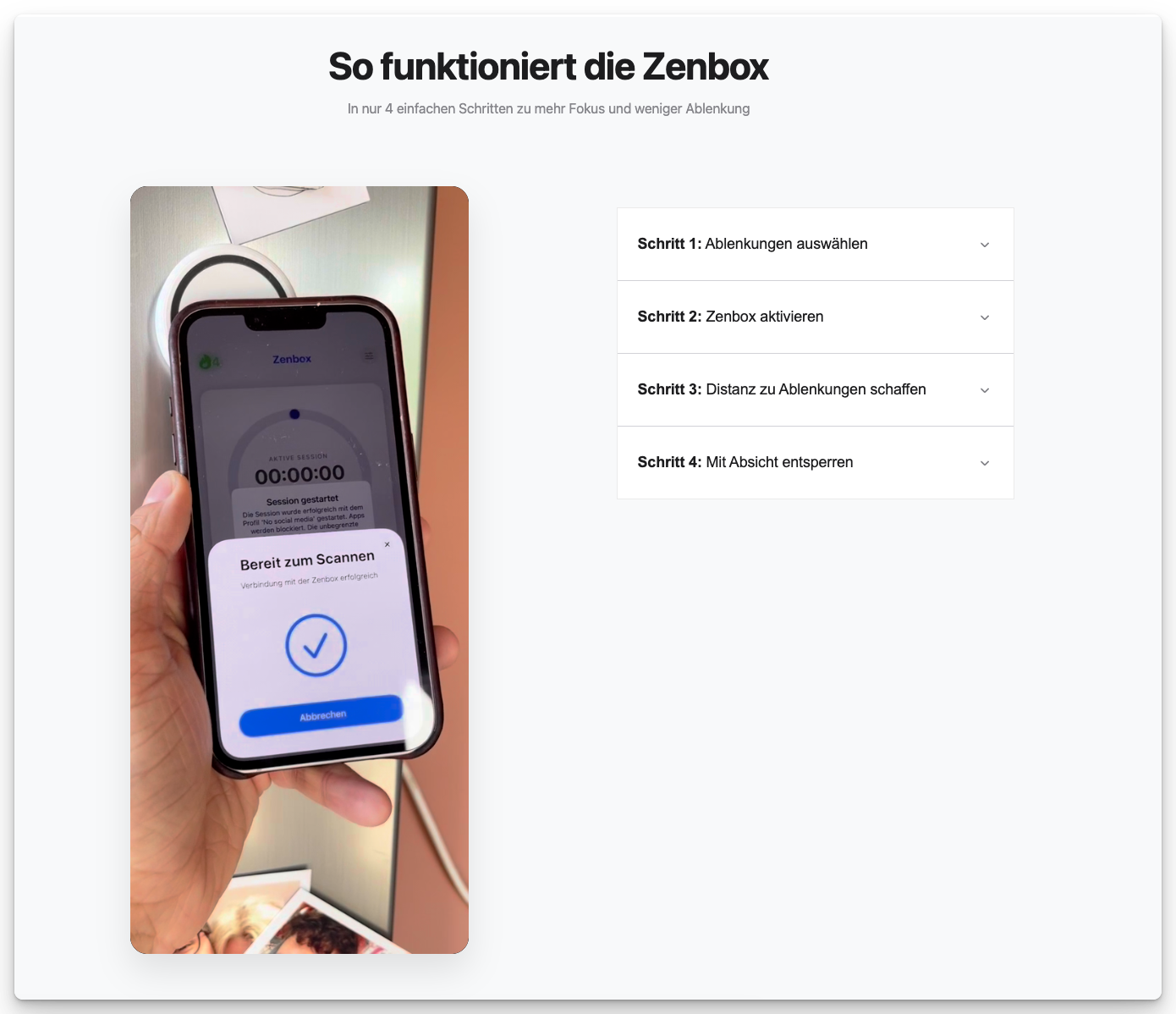
Zenbox is a physical device (49.90 euros) that works together with an iOS app. Users select apps they want to block and activate the block by touching the device. Without the device, the apps cannot be unlocked – physical distance as a barrier.
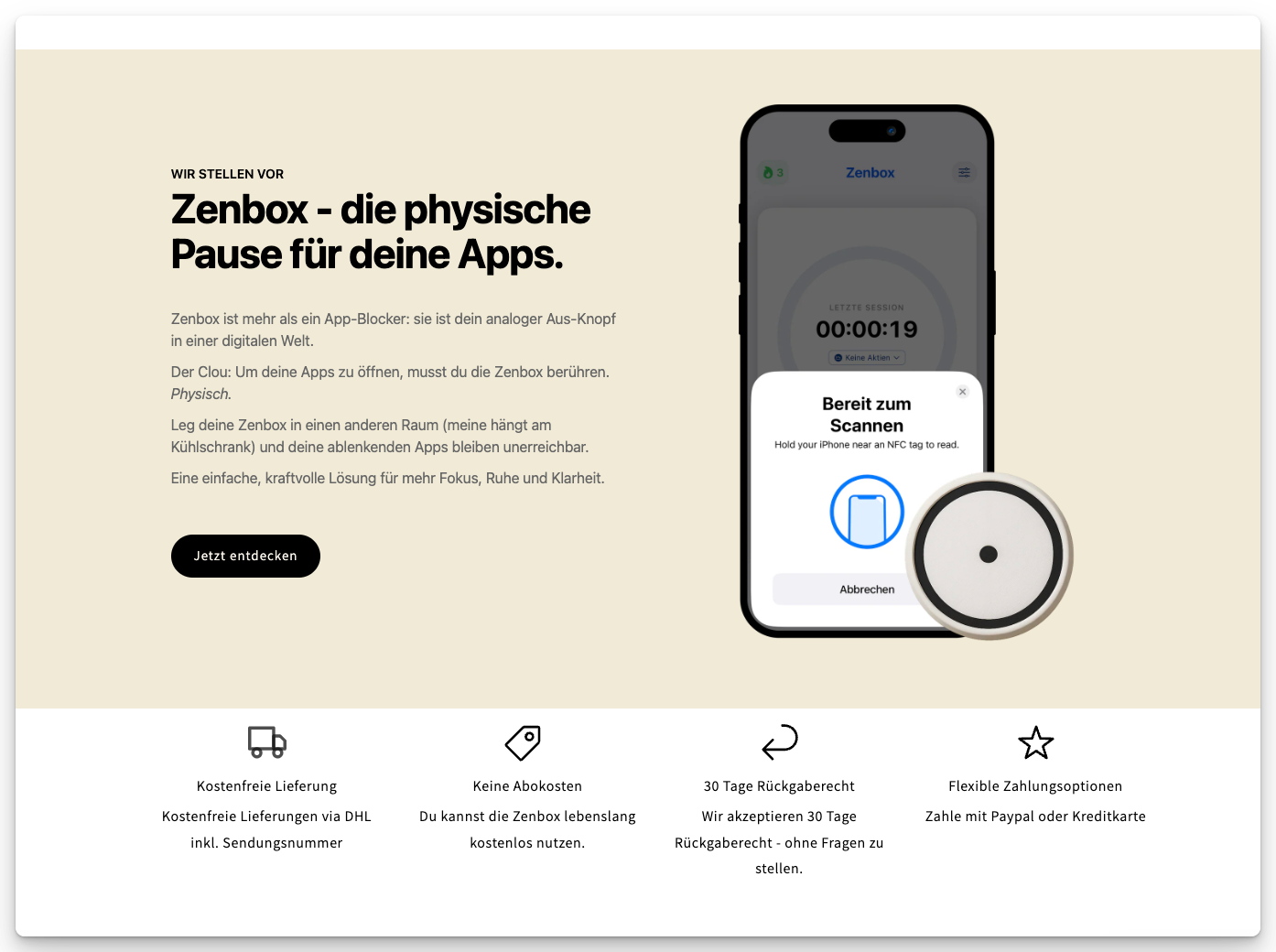
“It’s without subscription, offline, no account necessary,” Konstantin emphasizes. A conscious decision against the subscription model that is common with many digital wellbeing apps. “You buy the device once.” Some even buy two: one for work, one for home, one for the car.
The hardware is produced in China. Konstantin found a manufacturing partner that enables small quantities. “I’m a digital generalist. I can do a lot of things, but nothing really well,” he describes himself. Hardware was new territory – but feasible.
The first B2B customer comes from the wellness industry: “They have the idea of giving such a digital detox device as a guest gift” – similar to how luxury hotels give bread or wine at checkout. Several hundred devices will be purchased.
Marketing: LinkedIn Virality and Organic Growth
Konstantin’s biggest marketing success was a LinkedIn post on handy usage in the german Bundestag in summer. “Over a million views,” he says almost surprised. The post brought massive attention and sales. Before that, Konstantin had doubts during the summer lull: “I thought, nobody’s interested in this.”
His strategy: organic content on LinkedIn. Konstantin shares his development journey, learnings, and challenges. “You do sacrifice something for it. You ask yourself, why am I actually doing this?” But exactly this authenticity resonates.
Now he’s testing paid ads to scale. “I plan to scale the topic next year.” His goal: 100,000 euros revenue – a tenfold increase. That requires more than organic posts.
The newsletter is also running. Zenbox is sold through its own website, no Amazon, no marketplace. Direct sales, full control.
The Role of AI: From Failed to Launchable in 3 Hours
Konstantin is honest: “I had tried before to bring an iOS app to market. Failed. I just couldn’t get it done.” Without AI, Zenbox would never have existed.
With Cursor, an AI tool for developers, he built the first functional prototype in three hours. “Thanks to AI, I actually got it launch-ready.” The app had to go through Apple Review – Konstantin had to write himself a letter stating that the hardware owner allows him to use his hardware in the app. “They were satisfied then.”
Android is still coming, but here too: bureaucracy. “Let’s see if that happens again with Google,” Konstantin says pragmatically.
AI enables solo hardware startups. Previously, a developer team and months would have been necessary. Today you build it on the side, at night, with Cursor and willpower.
Bootstrapping Alongside Full-Time Job: How Does That Work?
Konstantin works full-time at Mercedes, taking care of productivity apps. On the side, he develops Zenbox. “You do sacrifice something for it. I could also be relaxing watching football or whatever.”
His advantage: clear prioritization.
“I had a list of ideas. Pretty long. And there’s a line: Ability to Create.”
Zenbox was the idea he could actually implement – technically and time-wise.
An earlier project, ClickBio (Linktree clone), failed. “It was super fun to develop. But marketing it – I had absolutely no fun with it.” Without intrinsic motivation, every side project dies after three months.
“You have to be extremely convinced of the solution and the product to do it longer than a few weeks,” Konstantin summarizes. Zenbox solves his own problem – that drives him.
What I Learned from the Interview:
AI democratizes hardware: Without Cursor, Konstantin would never have built an iOS app. AI enables solo startups in areas that previously required teams.
LinkedIn works for hardware: Over 1 million views on a post. Organic content brings sales – even for physical products.
Solving your own problem is the best start: Konstantin built Zenbox for himself. That keeps motivation high when things get difficult.
Learnings for Founders:
Use AI tools: Cursor, ChatGPT and co. enable building outside your own competencies. No more excuses: “I can’t code.”
Side projects need intrinsic motivation: “If you’re not convinced, the project dies after three months.” Choose a problem that really moves you.
Hardware is doable: Konstantin had zero hardware experience. China manufacturing partners with small quantities make it possible.
LinkedIn as B2C channel: Even for consumer hardware, LinkedIn works. Authentic developer stories resonate.
Start with a prototype: First prototype: magnet + NFC chip. No perfect design needed. Main thing, it works.
B2B often comes surprisingly: Konstantin thought of end customers. The first big deal came from the wellness industry as a guest gift.
10k in the first year is realistic: As a side project alongside full-time job and family. Not huge, but a foundation for scaling.
Happy Bootstrapping is a German podcast where I interview bootstrapped founders, indie hackers, and solopreneurs about their startup journeys.
Over the years, I’ve connected with many successful entrepreneurs who have built e-commerce shops, SaaS platforms, mobile apps, content businesses, or hybrid models.
Furthermore I am a bootstrapper myself and growing my DevOps-as-a-Sercice and Web Operations Company “We Manage”.