

Andreas Krause is a project manager in the events industry who founded weinwunder in late 2021 – an online wine shop with a clear unique selling point: wines that are otherwise unavailable in Germany.
Together with his partner, he runs the business as a family side project and currently generates between €30,000 and €50,000 in annual revenue. Started with three wines, now 60 in the portfolio. A story about niche strategy, patience, and the question of when a committed bootstrapper should consider outside funding.
This is a summary of Episode 157 of the “Happy Bootstrapping” Podcast (German).
The Founding Story
The founding of weinwunder begins with a crisis. When the pandemic shut down the events industry completely in 2020, Andreas needed an alternative. His longstanding passion for wine was there – but online wine retail is a shark tank with established players and million-euro budgets.
“If we want to offer something, we need to have something that nobody else offers – that’s our only chance with a limited budget.”
With this insight, Andreas specifically sought out wineries in Spain and Italy that don’t export their products to Germany. In late 2021, the shop went live – with just three wines. Each one personally selected, tested on site, the relationship with the winemaker built directly.
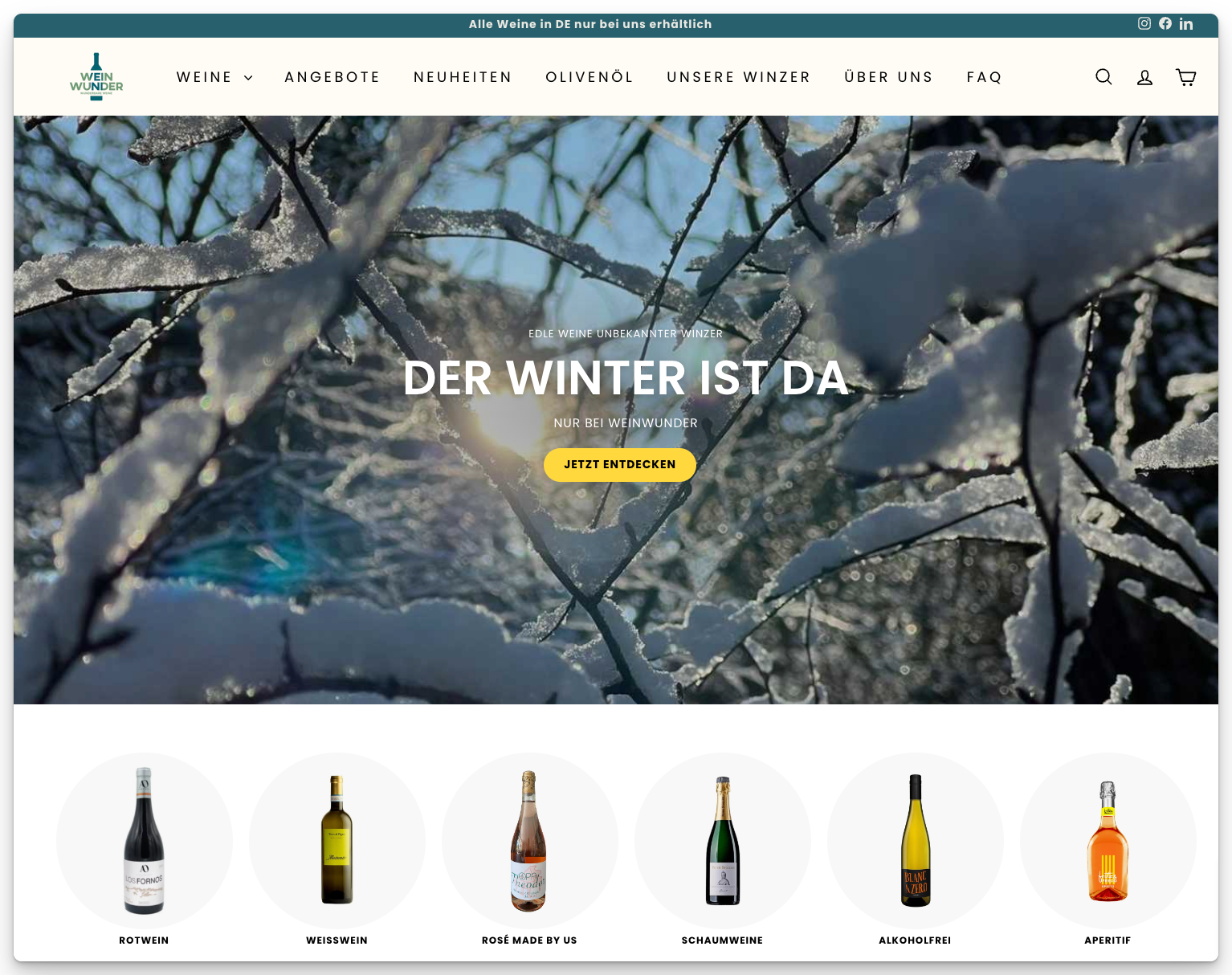
What started as a pandemic project has since become a real family business. His partner supports him, and the workday starts at 6:30 AM – woken by the cats. “For me, most of this doesn’t feel like work – it’s genuine interest. I’m just really into it,” Andreas says about his motivation.
The Product and Business Model
The weinwunder business model rests on four pillars: the online shop as the core, events and wine tastings as an experiential component, B2B business with restaurants and hotels, and collaborations with other companies. This diversification spreads risk and opens up different customer segments.
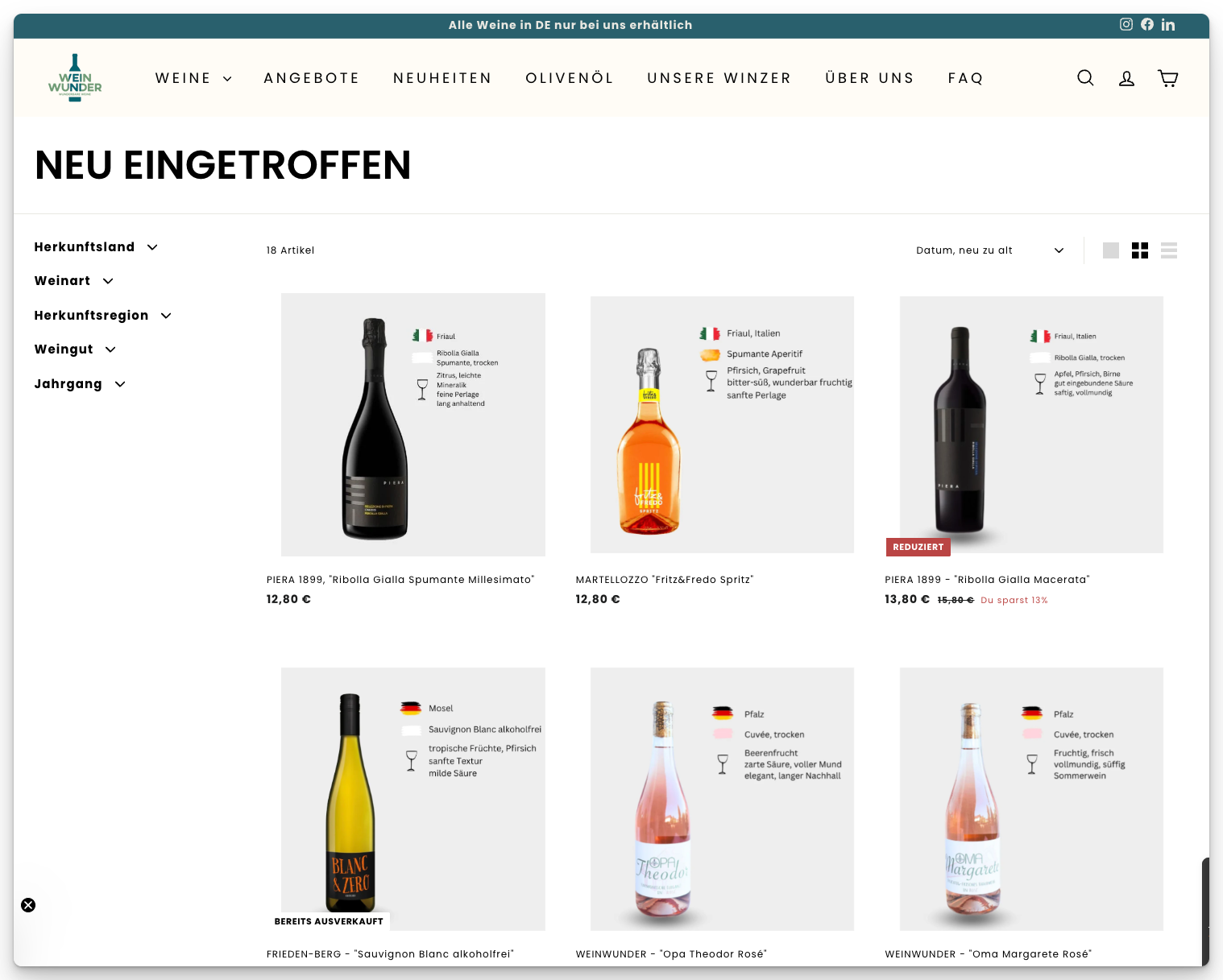
What makes the shop special: Every wine in the assortment was personally selected and tested on location. Andreas travels to the estates, builds relationships, and ensures quality. The portfolio has grown organically from three to 60 products – without compromises. Expansion into France is already in the works.
Revenue currently sits between €30,000 and €50,000 per year. Andreas himself calls the numbers “very modest.” But for a side business without outside capital, it’s a solid foundation. The goal is clearly defined: expand in 2026, become profitable in 2027.
Marketing and Growth
In the crowded wine market, Andreas relies on authenticity rather than advertising budgets. The personal relationships with winemakers are his strongest marketing channel – every story behind a bottle is real, every recommendation personally experienced. Events and tastings create direct customer contact and build a community that goes beyond online purchases.
Bootstrapping on the side has clear advantages: no investor pressure, full control over the assortment and growth pace. But it also has limits. Time and capital are constrained, growth is correspondingly slow. That’s exactly what’s bringing Andreas to an interesting turning point.
Challenges and Outlook
After three years of building, Andreas is considering outside funding – despite being a committed bootstrapper. The reason: to take the business to the next level, he needs more capital for inventory, marketing, and the expansion into France.
“I’m 98.9 percent convinced this can work – if we bring the intensity that the capital demands,” he explains his thinking. The challenge with part-time bootstrapping is clear: with limited time and budget, everything takes longer.
But one thing is certain for Andreas:
“This is passion – if the funding doesn’t work out, we’ll keep going anyway.”
Weinwunder is more than a business to him. It’s a passion project born from a crisis, built on real relationships with winemakers and customers.
What I Learned in This Interview
A unique selling point is mandatory: In the crowded online wine market, you have no chance without real differentiation – no matter how good the marketing is. Andreas understood this and delivers wines that nobody else in Germany offers.
Part-time bootstrapping requires patience: Without outside capital and with limited time, building takes longer. But you keep full control over the product and direction.
Passion carries you through dry spells: When the business doesn’t feel like work, you can push through difficult phases. That’s palpable with weinwunder.
Learnings for Founders
Niche beats breadth: Better to have a clear unique selling point than to compete with the big players. Andreas’ wines are only available through him.
Starting on the side reduces risk: Your main income provides security for experimentation. You can test, learn, and grow without existential pressure.
Diversification creates stability: Four pillars – online shop, events, B2B, collaborations – spread risk better than a single channel.
Bootstrapping isn’t dogma: If outside capital can accelerate growth, it’s a legitimate option. What matters is that the vision is right.
Quality over quantity: 60 hand-picked wines are more valuable than 600 interchangeable ones. The personal visit to each estate makes the difference.
Happy Bootstrapping is a German podcast where I interview bootstrapped founders, indie hackers, and solopreneurs about their startup journeys.
Over the years, I’ve connected with many successful entrepreneurs who have built e-commerce shops, SaaS platforms, mobile apps, content businesses, or hybrid models.
Furthermore I am a bootstrapper myself and growing my DevOps-as-a-Sercice and Web Operations Company “We Manage”.
This article comes at the perfect time, making one wonder what if such a niche business scaled too quickly, losing its core personal touch and identity?