

In episode 177 of Happy Bootstrapping, I spoke with Jonas Scholz, co-founder of Sliplane. Sliplane is a European container cloud: you connect your GitHub repository and your application runs – on their own infrastructure, including domains, SSL, and backups, without ever having to deal with Kubernetes.
What makes this episode interesting isn’t just the product, but how two people run a real cloud across five regions – bootstrapped, and with marketing that deliberately rubs people the wrong way.
This is a summary of Episode 177 of the “Happy Bootstrapping” Podcast (German).
From a Covid Hackathon to Their Own Cloud
Jonas and his co-founder Lukas Mauser met in 2020 at a large Covid hackathon. By pure chance the two ended up in the same group – and over the next three years they kept doing freelance jobs together. At some point both had had enough of pure client work and started asking themselves which product of their own they could build.
The answer was right in front of them. With their own clients they kept seeing the same wish: a simple, German cloud to spin up a few Docker containers. Not a huge high-availability setup on Hetzner, not a complex AWS construct – just a few clicks. That simply didn’t exist. So they started building it on the side, first alongside their studies, while Lukas was already working full-time. Once it earned enough, they made it their main focus. Sliplane really got going in April 2024.
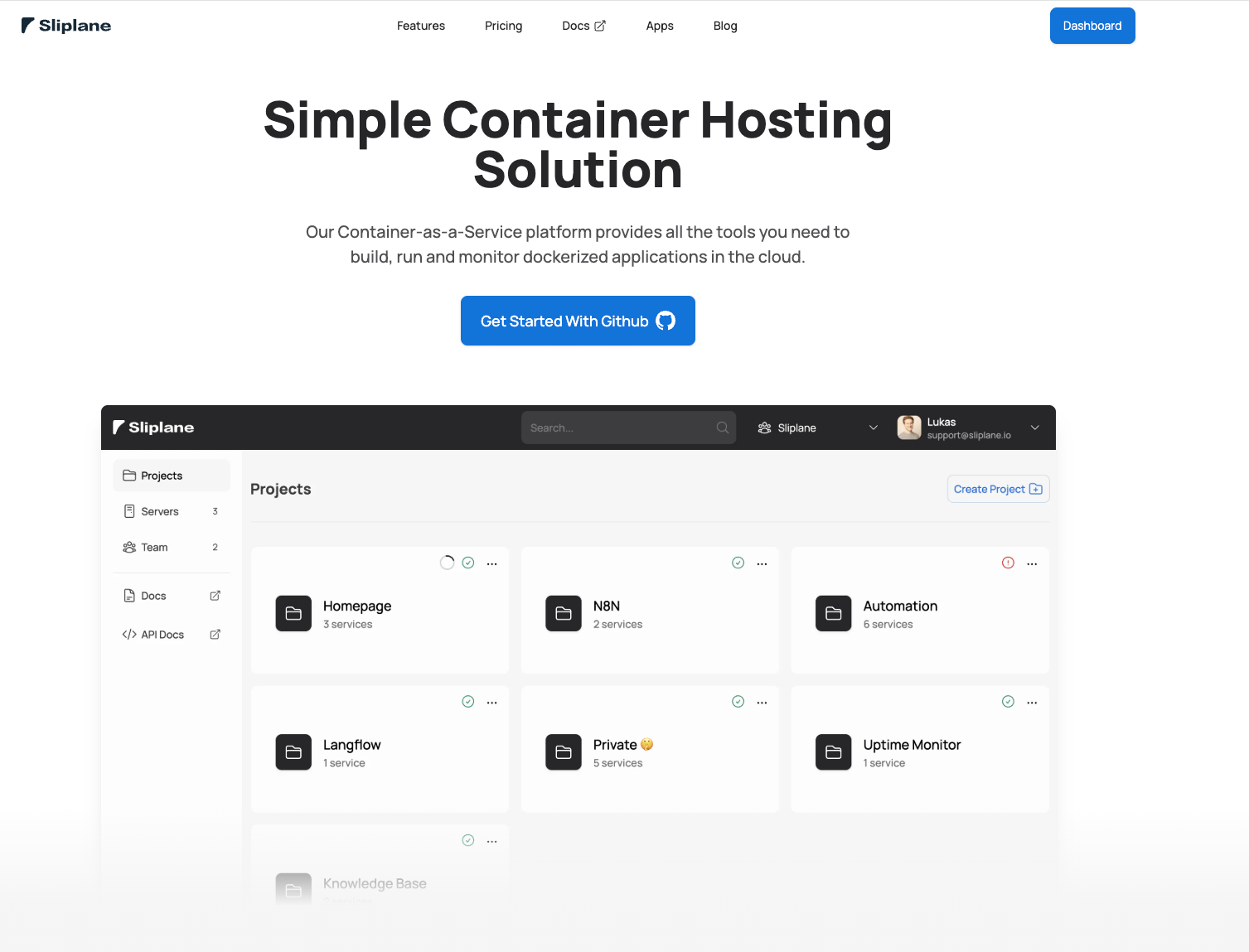
What Sliplane Actually Does
At its core, Sliplane is a platform-as-a-service. Instead of dealing with servers, reverse proxies, or certificates, you connect your repository and get a running application. Today Jonas and Lukas – plus one working student – look after around 1,100 paying customers and several thousand virtual machines across five regions: Germany, Finland, Singapore, and two locations in the US.
The ambition behind it is already in the claim: European container cloud. For many customers, that’s exactly the selling point. They don’t want their containers sitting with one of the big US hyperscalers, but with a manageable provider they can reach. Jonas sees their small size as an advantage here.
We’re small and German. When someone shows up in our support chat speaking German, we answer in German – and above all, we actually answer.
Growth Without an Ad Budget
Things get interesting with marketing. Sliplane grows essentially without paid advertising. The most important channel is Jonas’ writing on dev.to – over 160 articles and around 50,000 followers. And the posts that worked best were deliberately sharpened. His best-known piece is titled “Stop using AWS”.
Half the people just insulted me, saying I was the biggest idiot. But the other half agreed with me – and that half was exactly our target audience.
The clever part: even the people who insulted him in the comments shared the post – driving even more reach. The AWS article even made it into an AWS newsletter, where someone commented that this guy clearly had no idea what he was talking about. It became one of the best-converting posts ever. The second big growth spurt came from the n8n hype: when many people suddenly wanted to self-host their automations, they could do it on Sliplane with just a few clicks.
A Self-Built Server Stack Instead of Hyperscalers
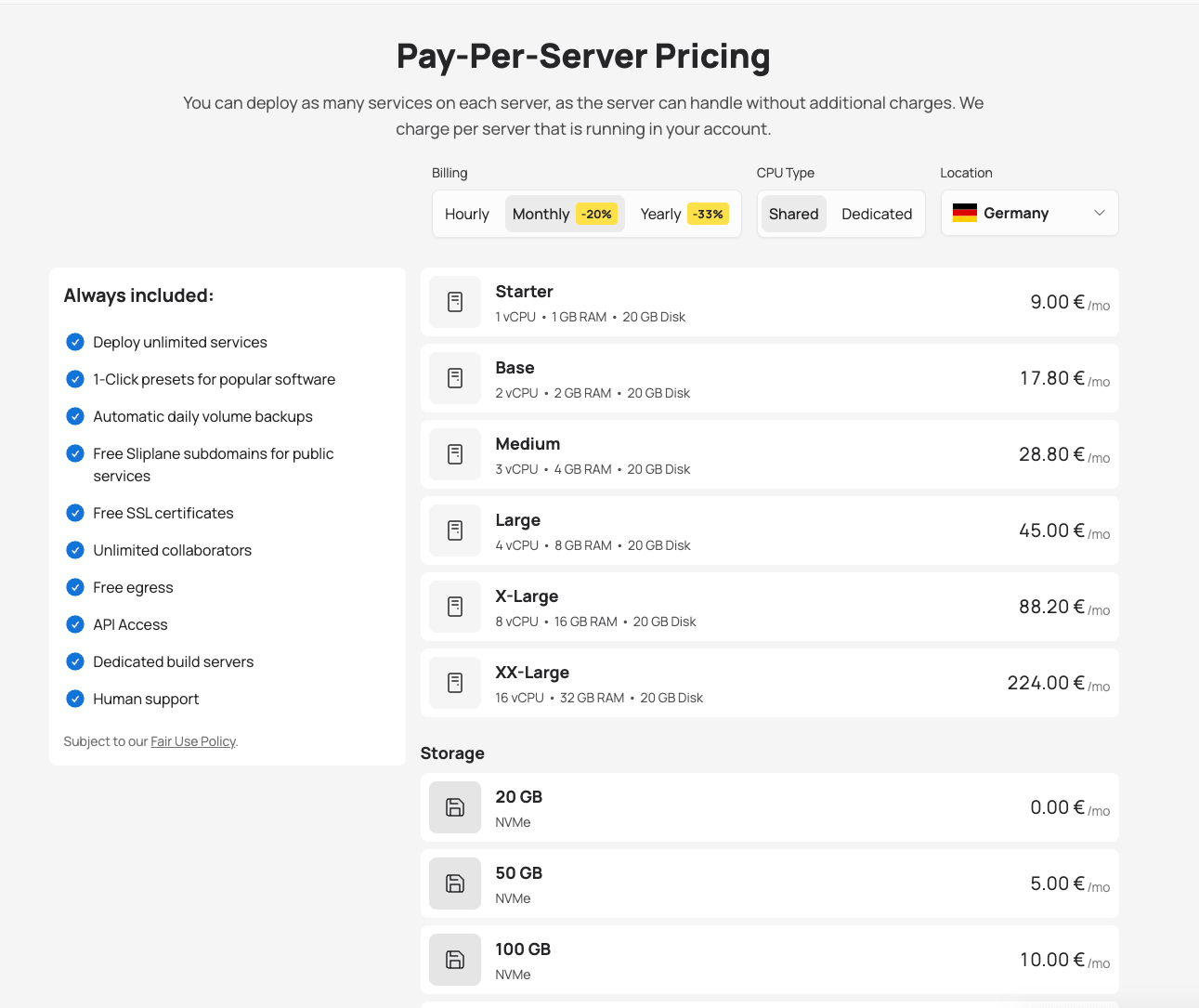
What sets Sliplane apart technically from many competitors: the two don’t assemble their platform from off-the-shelf parts, they build it. Under the hood runs a self-developed stack based on Cloud Hypervisor and their own orchestrator instead of Kubernetes – on their own hardware, rented from various bare-metal providers. This keeps fixed costs low and was one of the reasons Sliplane became profitable early.
But this very setup also leaves the business exposed to external factors. The recent price increase at Hetzner was a big topic in the episode, because such moves hit the margin of an infrastructure startup directly. Whoever runs the platform themselves also carries the full risk.
The Downside: On Call 24/7 as a Team of Two
As impressive as the numbers are, Jonas is refreshingly honest about the price they pay. Running a cloud as a team of two means permanent on-call duty. When something fails at three in the morning, there’s no one to hand it off to. It isn’t sustainable right now, he admits himself – but it’s too much fun to set limits.
It’s so much fun right now that it’s hard to draw your own line.
He’s just as open about the question of selling: everyone has a price. But they bootstrap very deliberately, not as a fast track to an exit – and right now, selling would mean giving away far too much potential.
What I Learned in the Interview
What impressed me most was how consistently the best product grew out of a problem the two had constantly in front of them. They didn’t have to invent some grand vision – they simply took their own clients’ recurring wish seriously and built what was missing.
Jonas’ approach to reach is just as instructive. A clear, even polarizing stance beats playing it safe and staying invisible. Anyone who takes a position attracts pushback – and on the internet, pushback is distribution too. The only thing that matters is that the agreeing half is your actual target audience.
And finally, the honesty about the downsides: running a cloud as a team of two sounds like freedom, but it also means night shifts without a safety net. That Jonas says this openly is what makes the episode especially valuable.
The full episode is now also on YouTube (German only):
Learnings for Founders
The best product often hides in the problem you keep seeing as a service provider.
Low fixed costs give you early profitability – and with it, independence.
A clear stance in your content brings more reach than agreeable mediocrity.
Even your critics share your content – pushback is distribution.
Whoever runs their own infrastructure carries the full margin, but also the full risk.
Bootstrapping is a deliberate choice, not a fallback on the way to an exit.
Happy Bootstrapping is a German podcast where I interview bootstrapped founders, indie hackers, and solopreneurs about their startup journeys.
Over the years, I’ve connected with many successful entrepreneurs who have built e-commerce shops, SaaS platforms, mobile apps, content businesses, or hybrid models.
Furthermore I am a bootstrapper myself and growing my DevOps-as-a-Sercice and Web Operations Company “We Manage”.