

Julian Meier from Berlin has been developing software for over half his life. At 16, he built his first website. As a dual student, he developed one of Europe's largest weather apps for Meteoblue. Since 2019, he's been working on his own app: Sonuby Weather. Currently, the app brings in around $1,400 monthly – alongside his freelance work. A story about one of the toughest app markets, the power of blog features, and why generic weather apps no longer stand a chance.
This is a summary of Episode 155 of the “Happy Bootstrapping” Podcast (German).
The Founding Story
Julian’s path into software development began at 16 on a school trip. An older classmate was building an online shop, and Julian was fascinated by HTML and JavaScript. “Somehow it just grabbed me,” he recalls. After the weekend, he ordered two books on HTML and PHP and spent the entire summer building his father’s website.
The decisive step came in 2014 as a dual student at Meteoblue in Switzerland. Apple had just introduced Swift, and Julian proposed developing an iOS weather app – the company didn’t have one yet. “From this passion for developing, the passion for weather apps emerged,” he describes the turning point. The Meteoblue app became one of the largest weather apps in Europe.
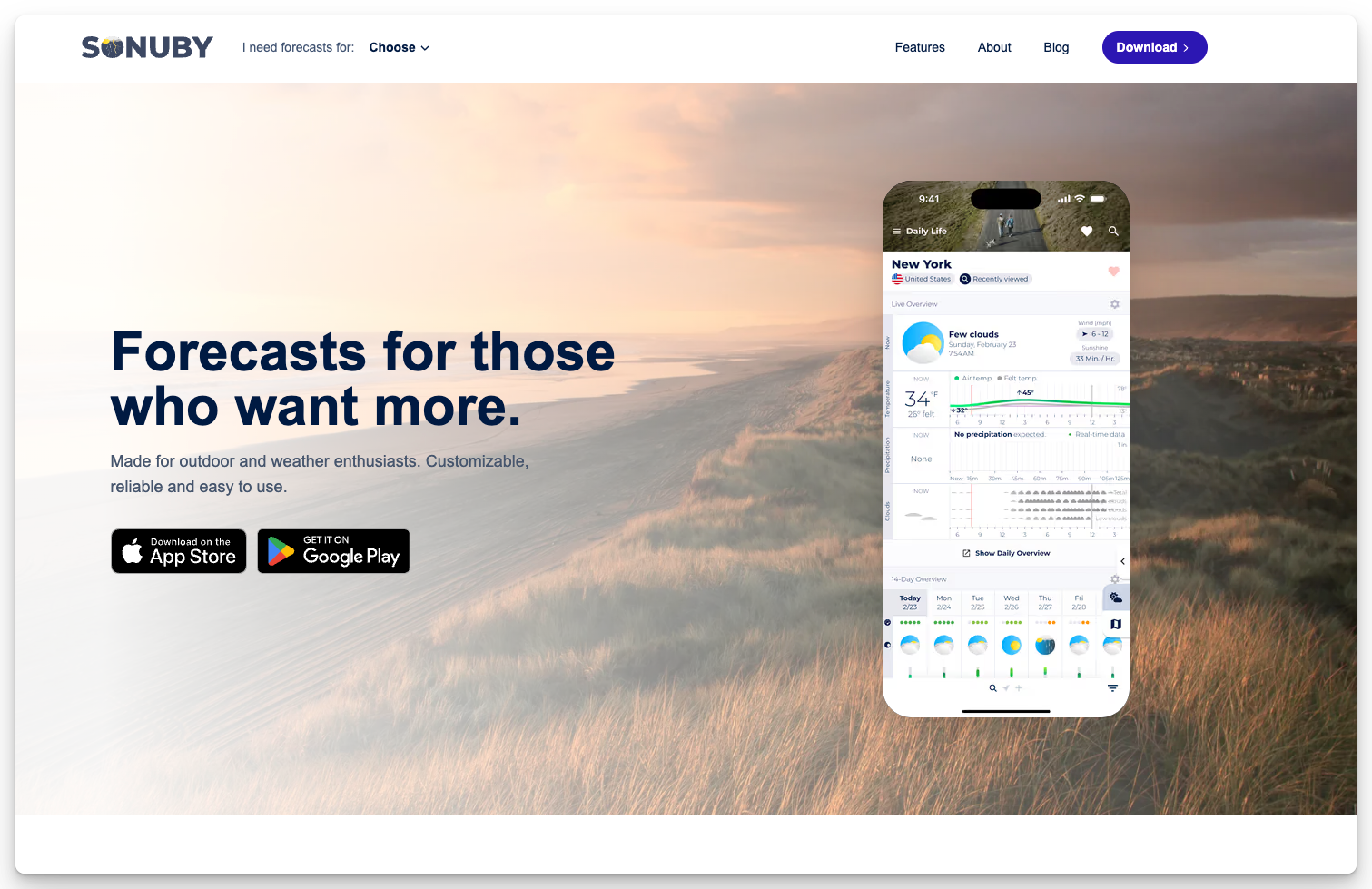
In 2019, Julian quit and started Sonuby. The name combines the Latin words for sun (solis) and clouds (nubes). In spring 2024, he decided to work full-time on the app for a year:
“Completely bootstrapped, no external funding, just locked myself in my room for nine months with my own resources.”
The Product and Business Model
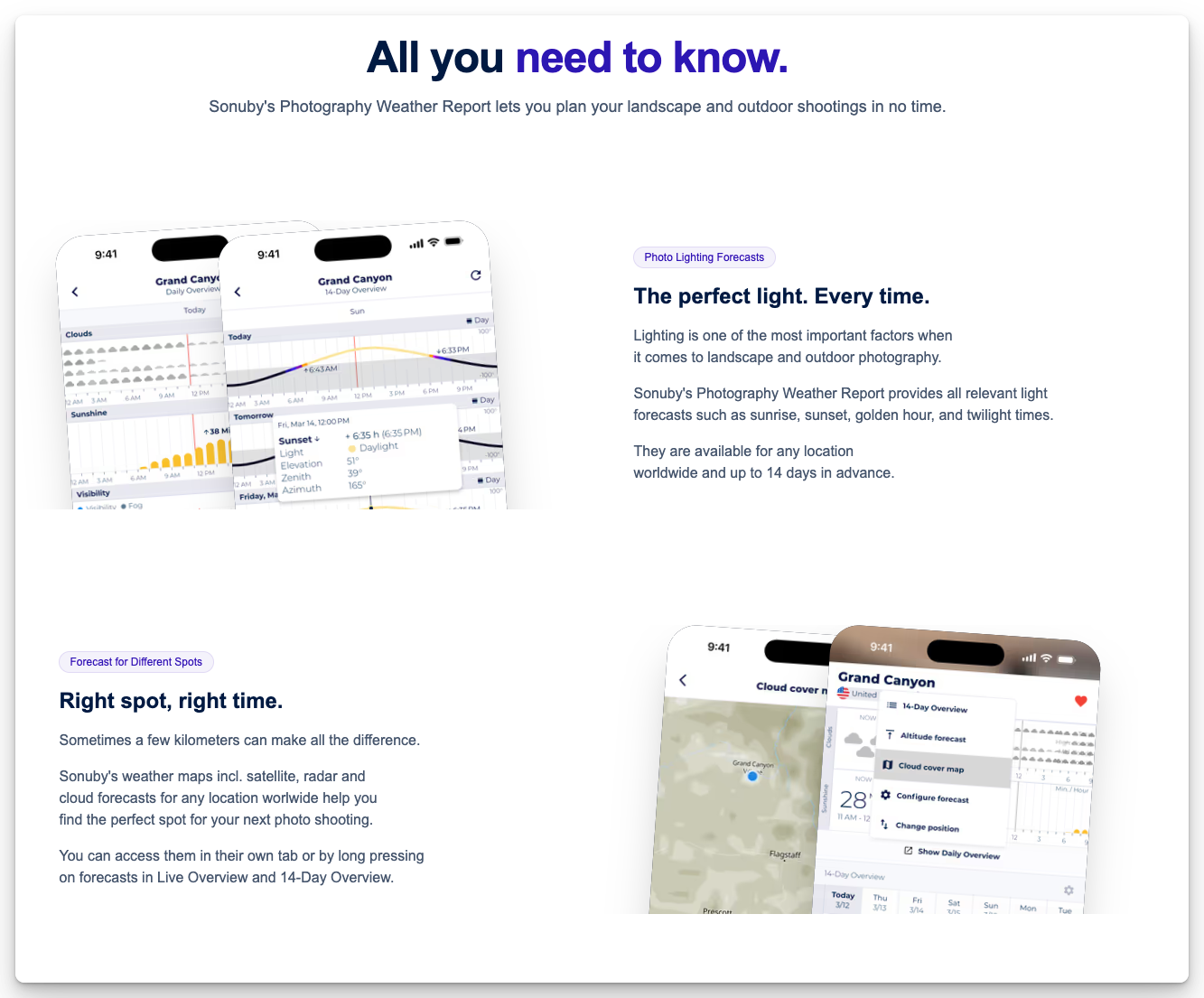
Sonuby is a customizable weather app for people who need more than temperature and precipitation. Sailors need wind forecasts across entire areas, skydivers need different cloud heights, photographers need the exact golden hour with cloud coverage. “My goal is to create an app that adapts to the user,” Julian explains.
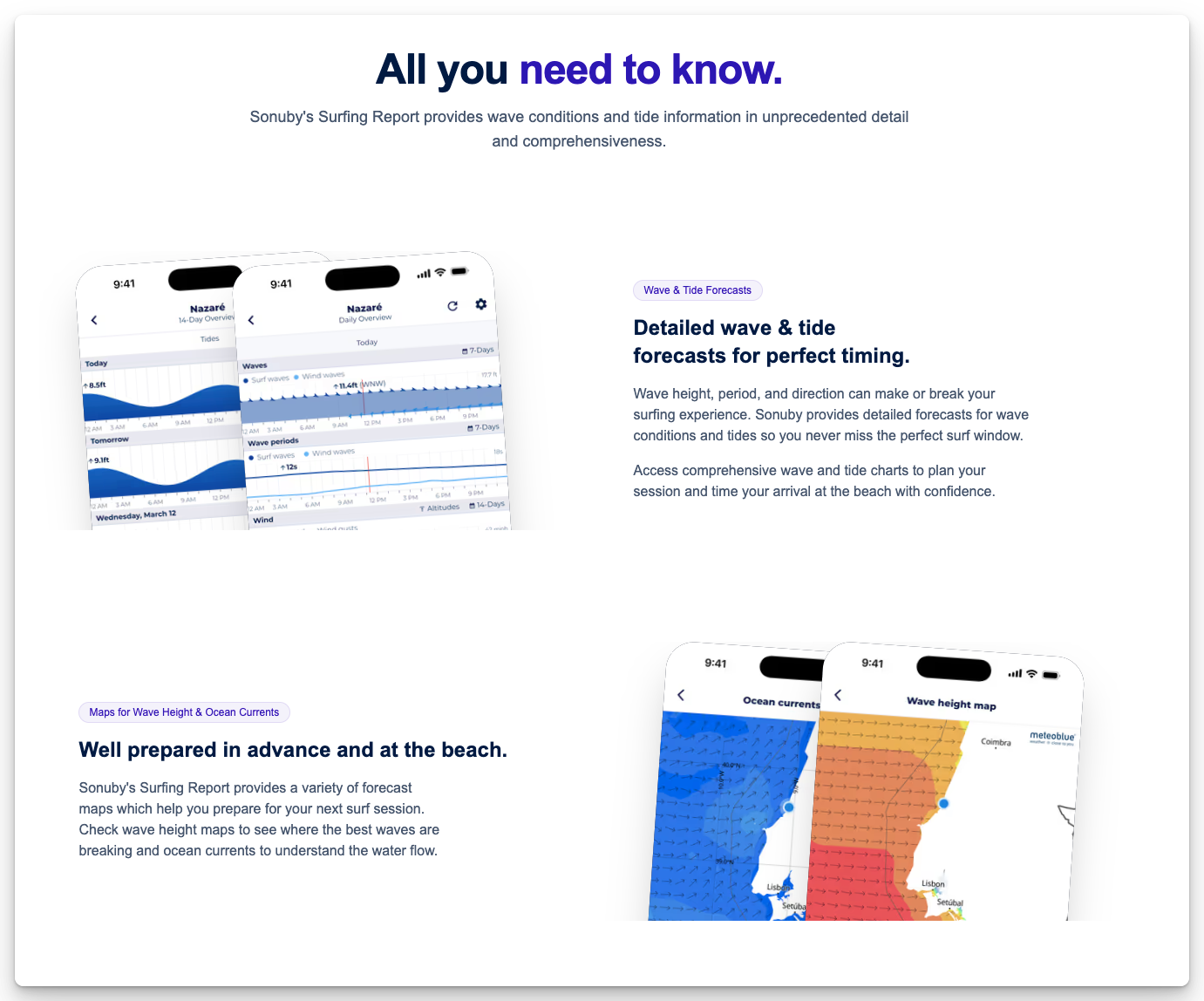
The freemium model already offers comprehensive weather data for free. Payment is for customization options: custom dashboards, personalized widgets, activity profiles. The monthly subscription costs €1.99, the annual subscription €17.99, the lifetime purchase around €99. Currently, Sonuby has about 1,000 subscribers and 3,500 active users. The main target groups: photographers, drone pilots, and hobbyist users who want to configure their own views.
Julian still gets weather data from Meteoblue – through a revenue-share model. “The app makes over 200,000 requests to the server per day. That would be so expensive that it wouldn’t make financial sense,” he explains the arrangement with his former employer.
Marketing and Growth
The weather app market is brutal. “There are few areas as saturated with existing offerings,” says Julian. Keywords like “weather app” cost €7-8 per click in App Store Ads. Positioning a generic weather app against Weather Channel or weather.com is practically impossible.
What works: blog features and niche focus. Julian was featured by appgefahren.de, iPhone Ticker, and even 9to5Mac. “I sent the email on Tuesday and got the feature that Saturday,” he says about the 9to5Mac success. The blogs earn through affiliate links when users make in-app purchases via their articles.
Black Friday brought a significant revenue boost: Julian had built logic to remotely activate offers in the app. The lifetime purchase at 50 percent off plus listing on Black Friday deal sites brought in $1,500-1,600 in just one week.
Challenges and Learnings
The biggest challenge is time. Five months for iOS widgets, three months for Android. “Last year I sometimes had a workload of 60-80 hours per week,” Julian admits. He was able to build the Android widgets entirely with Claude Code – without any Kotlin experience. “Otherwise I probably would have needed a year.”
For future apps, Julian has changed his strategy:
“I wouldn’t build a new app anymore without having an App Store Optimization strategy. If people aren’t searching for the app, I wouldn’t build it.”
He’s planning six more apps – all with an ASO-first approach, all in sub-areas of Sonuby.
What I Learned in This Interview
In the weather market, only those who serve niches win: Generic weather apps don’t stand a chance against the big players. Julian reaches his users through specialized features for photographers, drone pilots, and sailors.
Blog marketing works surprisingly well for apps: Without an advertising budget, features on iPhone Ticker, appgefahren.de, and 9to5Mac brought in most users. The blogs earn through affiliate links.
ASO-first as the new strategy: Before building an app, check if there’s even search demand. Julian tests keywords with App Store Search Ads before developing.
Learnings for Founders
Build remote paywall control: Julian can remotely activate offers in the app – for Black Friday or Easter. This generated significant revenue.
Revenue share instead of pay-per-request: With 200,000 API requests daily, a classic data model would be unaffordable. The revenue-share model with Meteoblue scales along.
Widgets are an underestimated feature: The configurable widgets were the most requested feature and significantly accelerated growth.
AI tools enable platform jumps: The complete Android widgets were built with Claude Code – without Kotlin knowledge. This saved months of development time.
Serve both platforms: iOS users pay more readily, but Android’s mass balances that out. And it spreads risk in case a store account gets suspended.
Happy Bootstrapping is a German podcast where I interview bootstrapped founders, indie hackers, and solopreneurs about their startup journeys.
Over the years, I’ve connected with many successful entrepreneurs who have built e-commerce shops, SaaS platforms, mobile apps, content businesses, or hybrid models.
Furthermore I am a bootstrapper myself and growing my DevOps-as-a-Sercice and Web Operations Company “We Manage”.