

Lorenz Strasser built Pentacode, an HR workforce management software for mid-sized businesses – completely bootstrapped, without a business angel, without an investor.
Today the company employs 22 people and manages over 60,000 active employees at connected businesses. More than 15 million shifts have been planned. The company is cash-positive. A story about brutal cold calling reality, the journey from restaurateur to software entrepreneur, and a clear philosophy: “Whoever pays calls the shots.”
This is a summary of Episode 158 of the “Happy Bootstrapping” Podcast (German).
The Founding Story
Lorenz’s path to Pentacode doesn’t begin at a desk, but in the restaurant industry. After studying mathematics and computer science, he had already founded two companies, including a restaurant chain with 13 locations and over 500 employees. That’s exactly where the problem lay: there was no suitable HR software for SMEs. The big solutions like Atos were simply unsuitable for mid-sized businesses.
Lorenz started in 2012 with the first version under a different name, and the idea solidified in 2017 before becoming Pentacode. From the beginning, one thing was clear: no outside capital.
“Whoever pays calls the shots – that’s why I never wanted to take outside capital.”
Lorenz has maintained this stance to this day. The only obligations: wages, salaries, and the tax office. No investors interfering. No business angels with their own interests.
The Product and Business Model
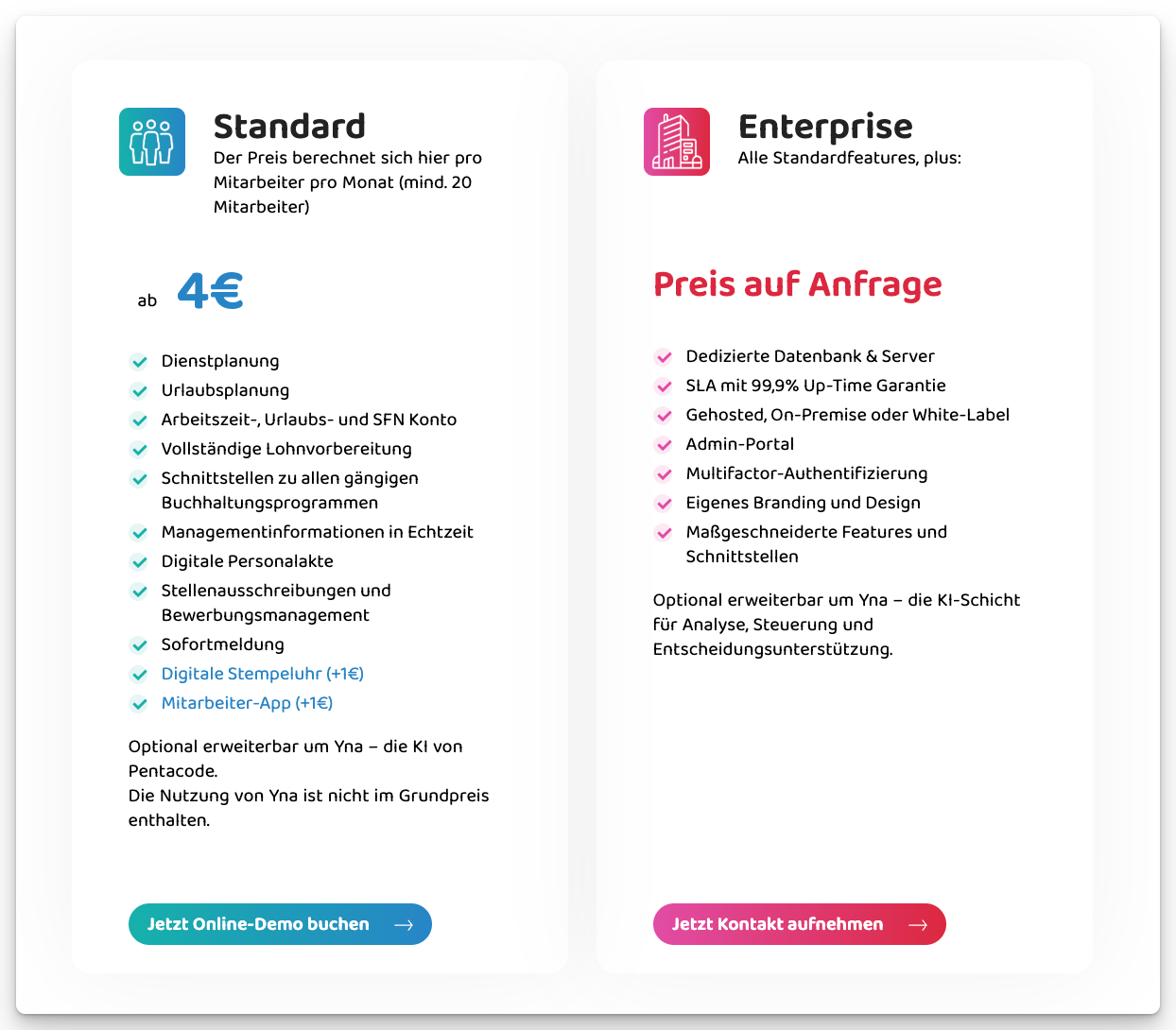
Pentacode is an HR workforce management software specifically for mid-sized businesses – time tracking, shift planning, personnel management. The target group: companies that are too big for Excel but too small for enterprise solutions. Billing is based on managed employees.
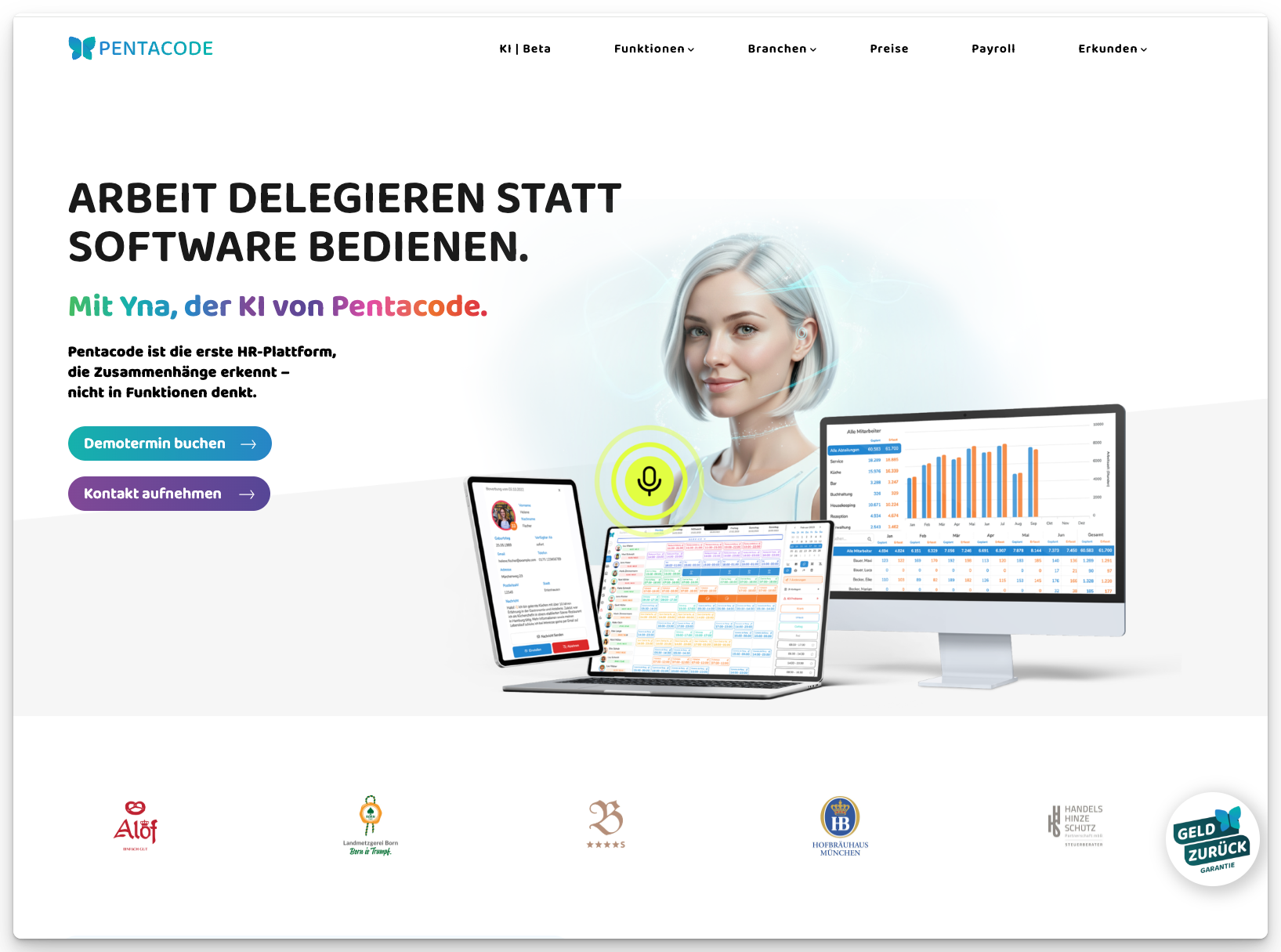
One third of the 22 employees work in tech. The software currently manages nearly 60,000 active employees and has planned over 15 million shifts. Lorenz deliberately chose to incorporate as an AG (stock corporation) rather than a GmbH – this provides flexibility for the future.
Revenue? Lorenz keeps that to himself. But he shares one figure: the company operates profitably and is cash-positive. For a bootstrapped SaaS company, that’s the most important milestone.
Marketing and Growth
The early days were brutal. Lorenz shares his cold calling numbers with unflinching honesty:
“Cold calling at the beginning: 1,000 calls, 50 meetings, 5 clients. That was the reality.”
1,000 calls for 5 clients. That’s a conversion rate of 0.5 percent. Anyone who doesn’t give up with numbers like that either has tremendous patience or is crazy. Lorenz had both – plus the knowledge that his product solves a real problem. Large HR solutions are too complex and too expensive for mid-sized businesses. Pentacode filled that gap.
Today the situation looks different. “I’m glad I don’t have to do cold calling anymore. New opportunities are opening up that are much more fun,” says Lorenz. The company grows organically, referrals play a major role. The approach: consulting instead of selling. When you understand what the customer really needs, you don’t have to cold call anymore.
The expansion into Austria proved particularly challenging – 700 different collective bargaining agreements made adapting the software complex. German companies easily underestimate such regulatory hurdles.
Challenges and Success Factors
Lorenz names three fundamental requirements for successful entrepreneurship – beyond any business idea:
“You need optimism over a long period of time, resilience, and frustration tolerance. If you get frustrated quickly, you should ask yourself whether you want to put yourself through this.”
Optimism, resilience, frustration tolerance. The entrepreneur either brings these three qualities – or should leave it alone. That sounds harsh, but Lorenz speaks from experience. Organizational oversight during growth is crucial: constantly questioning yourself whether current processes still work.
Privately, he maintains balance with daily exercise, playing cello, and 25 years of marriage. Because entrepreneurship is a marathon, not a sprint.
What I Learned in This Interview
Cold calling is a numbers game: 1,000 calls, 50 meetings, 5 clients. If you know this reality, you don’t give up after 100 calls. Success comes through persistence, not talent.
Independence has a price – and a value: Without investors, you grow slower. But you keep control. “Whoever pays calls the shots” is more than just a saying.
Industry knowledge is an unfair advantage: Lorenz knew the problems from 13 restaurant locations with 500+ employees. He didn’t need to ask anyone what the market needs – he already knew.
Learnings for Founders
The three success factors: Optimism over a long period, resilience, and frustration tolerance. If you get frustrated quickly, you should ask yourself whether entrepreneurship is right for you.
Cold calling works – but the numbers are brutal: 0.5% conversion is normal at the beginning. If you know this, you plan accordingly and don’t give up too early.
Bootstrapping protects the vision: Without external funders, there’s no one dictating the direction. The company grows as fast as cash flow allows.
From problem to product: The best software is created when the founder has experienced the problem themselves. Lorenz’s restaurant background was his unfair advantage.
AG instead of GmbH can make sense: More flexibility for the future, even if you’re not currently seeking investors.
Happy Bootstrapping is a German podcast where I interview bootstrapped founders, indie hackers, and solopreneurs about their startup journeys.
Over the years, I’ve connected with many successful entrepreneurs who have built e-commerce shops, SaaS platforms, mobile apps, content businesses, or hybrid models.
Furthermore I am a bootstrapper myself and growing my DevOps-as-a-Sercice and Web Operations Company “We Manage”.