

Markus Hetzenegger sells online tickets. With NYBA in Frankfurt, he handles around 1,200 events a year, among them shows for Live Nation, Superstruct, Merlin Entertainment, Cirque du Soleil and the Adele concerts in Munich.
That has added up to 75 million tickets sold, backed by roughly 400 million euros in advertising budget across 25 markets. The team behind it: about 20 people. A story about iteration, about data turning into a business model, and about the decision never to take outside money.
This is a summary of Episode 185 of the “Happy Bootstrapping” Podcast (German).
A Spanish Fishing Village, a Warehouse Job and the First University Events
Markus grows up in a fishing village in southern Spain. When the family moves back to Bavaria, almost every school turns him down, and his first English test ends with three points out of fifty. A dual study programme at BMW follows, which he drops in the final year. At the same time, at 17, he starts marketing university events – not with flyers, but through Facebook groups and paid ads. The parties sell out, and organisers come back asking for more.
To fund the young business, he works in a warehouse on the side. The first three clients he handles for free, simply to prove the approach works. University parties turn into clubs, clubs into festivals, festivals into international tours.
The Investor Who Bought an Event and Switched Everything Off
The turning point comes early. An investor buys the second event NYBA is marketing – and then shuts everything down: the website, the Instagram channels built up over months, the entire content library.
“And back then I asked myself, why would you buy something for many millions and then flatten it completely?”
The answer he arrives at on his own: what was bought were the data. From that point on he stores, structures and segments systematically – anonymised, never with personal records, but consistently for more than a decade. That groundwork later becomes the platform NYBA runs on today: it briefs content, checks tracking, issues recommendations and forecasts how a ticket sale will develop.
A Small Licence Fee and a Large Share of the Upside
On pricing, NYBA deliberately moves away from the classic agency model.
“With us there is a small licence fee, simply for having the licence to use the platform”
On top of that comes a share of the results. Pure performance-based pricing was more profitable for a while, but too volatile: a strong fourth quarter and an empty January swing too hard to plan a team around. The licence fee smooths that out, at the cost of slightly lower revenue.
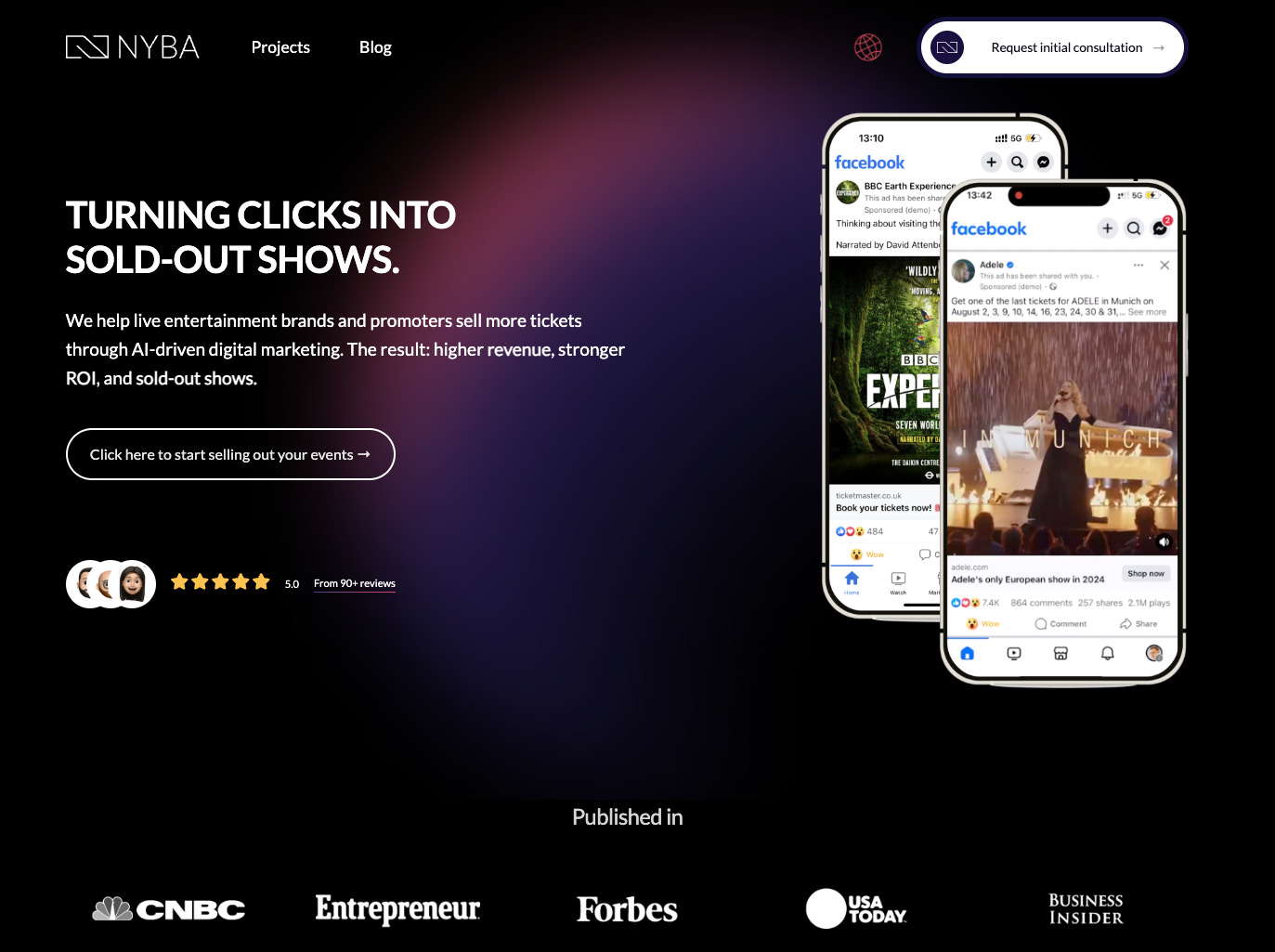
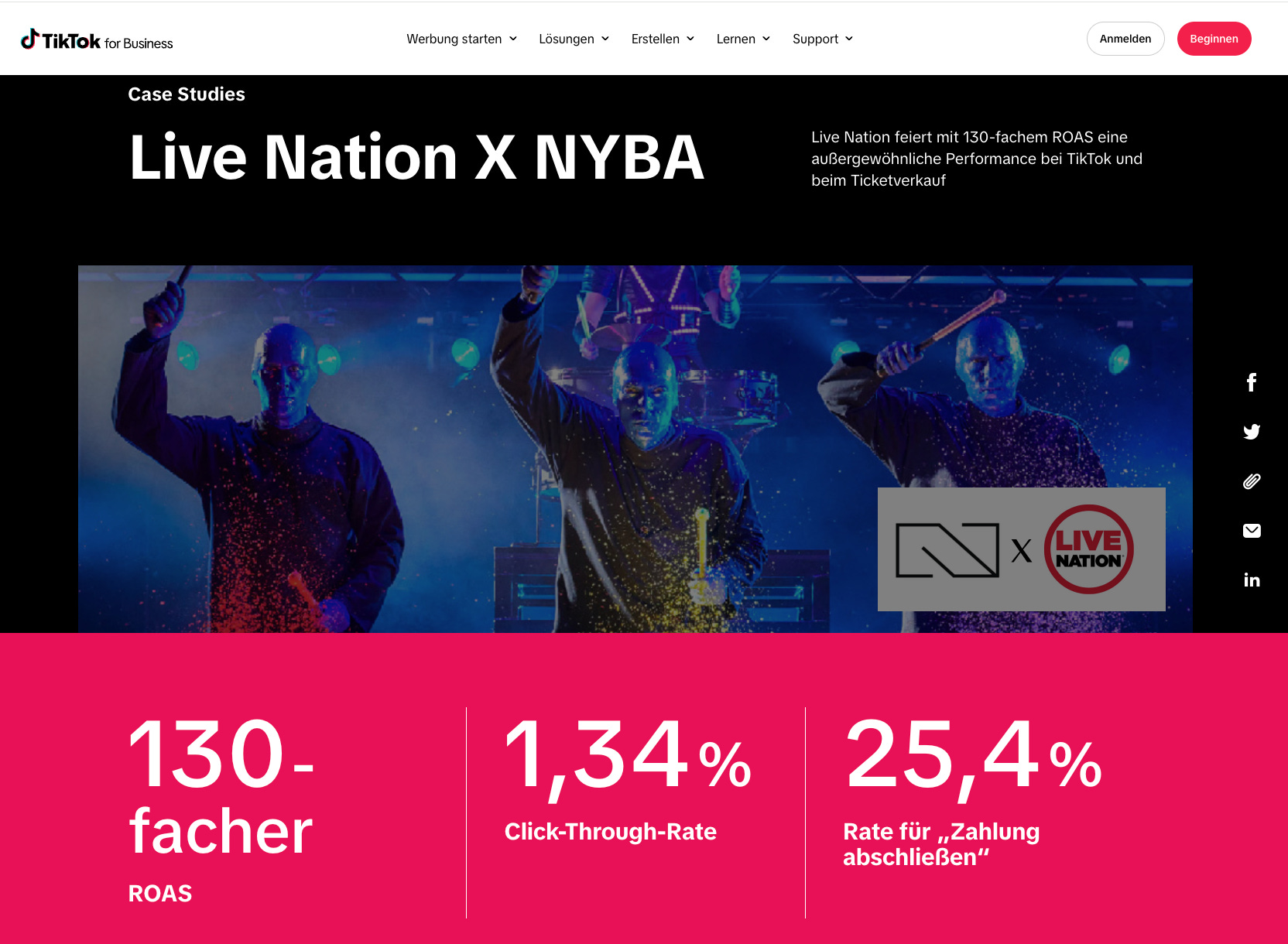
The actual sales argument is measurability. For many clients the digital share of the marketing budget has risen from around ten to between 60 and 80 percent – not because billboards got worse, but because digital finally made it visible which euro sold which ticket. Campaigns run on Meta, Google and TikTok, and depending on the market on Snapchat or Reddit. The most successful live entertainment campaign on TikTok worldwide ran through NYBA.
No Loan, No Investor, No Exit
On financing, Markus is unambiguous.
“First of all, we have never taken out a loan. We have never had an investor. And I am genuinely proud of that.”
The platform represents a solid seven-figure sum – paid for out of the running agency business. Investors now knock two or three times a month. His argument against them is not financial: he went independent for the freedom, and part of that freedom would go back out the door with an investor at the table.
An exit is not a goal either. Markus knows several founders with large exits who say in hindsight it was the worst decision of their lives, because losing the company meant losing the purpose. Bootstrapping has a practical side effect here: when an investment comes out of your own pocket, you collect three quotes instead of one.
“And then you look all the more closely.”
Marketing for Themselves Only Since Last Year
Surprising for a marketing company: for years, NYBA did no marketing of its own. Everything came through referrals and existing clients. Only once the platform was in place, and it was clear that additional demand could be served, did B2B campaigns and a sales team follow.
Looking ahead, Markus sees live entertainment as a counter-movement to life in front of screens – rising screen time, loneliness, fewer real encounters. His guiding principle is the one he started with.
“But I believe this iterating, trying to get a little bit better every day, really is the key to success.”
What I Learned in the Interview
Data beats reach: The decisive moment was not a big campaign but the realisation that a buyer was only interested in the data.
Scale only came with the product: As long as every campaign was built by hand, a handful of events was the ceiling. The platform turned a service into a business model.
Freedom is a hard criterion: Markus does not weigh outside capital in percentages but in decision-making power given away.
Lessons for Founders
Deliver first, market second: Advertising for yourself only makes sense once you can serve the demand.
Measurability is the sales argument: Clients shift budget to where they see the effect, not to where it is cheapest.
Price in volatility: Pure performance-based pricing can be more profitable and still be the wrong call if it makes planning impossible.
Your own money forces precision: Three quotes instead of one, and only the hires you need.
An exit is not a given: Handing over the company often means handing over the purpose as well.
Happy Bootstrapping is a German podcast where I interview bootstrapped founders, indie hackers, and solopreneurs about their startup journeys.
Over the years, I’ve connected with many successful entrepreneurs who have built e-commerce shops, SaaS platforms, mobile apps, content businesses, or hybrid models.
Furthermore I am a bootstrapper myself and growing my DevOps-as-a-Service and Web Operations Company “We Manage”.