

Stephan Lerner is an iOS developer at Techniker Krankenkasse – four days a week, structured, and deliberately so. In his remaining time, he builds Monee, a household budget app that works manually, stays intentionally simple – and today has over 16,000 daily active users and sits at #1 in the German App Store.
The remarkable part: the app is free. No subscription, no paywall, no freemium model. And that’s exactly why it grew.
This is a summary of Episode 165 of the “Happy Bootstrapping” Podcast (German).
An App Built for Himself – Then for Everyone Else
The idea came from personal frustration. Stephan and his wife had tried various budget apps for years – and always ran into the same problems: suddenly doubled transactions, wrong totals, bugs he couldn’t understand as a developer. In early 2022, he thought: fine, I’ll just build it myself.
Two to three months later, the first version was live. It couldn’t do much – but it let him and his wife track their expenses together. That was enough. Early users showed up, some even paid for it. And Stephan realized: there’s a market for people who genuinely want to track their finances manually.
“I’ve been doing this ever since I started working – tracking every cent. And eventually I got my wife to join in, because I just think it’s important to have a clear picture of your finances.”
The Turning Point: Going Free
By late 2023, the app had stagnated at around 40 daily active users. Revenue was under €100 per month and App Store rankings were mediocre. Stephan rethought his approach – and removed the price entirely.
What happened next surprised even him. Within a year, daily active users grew from 40 to 2,700. By the end of 2025 it was 11,000 – and three months later, 16,000. No paid marketing, no viral moment, no new feature. Just: free.
“There’s no way I could have bought this growth through any kind of marketing.”
The mechanism is simple and self-reinforcing: more downloads lead to better rankings, better rankings lead to more reviews, more reviews lead to more downloads. On top of that came an effect Stephan hadn’t anticipated – mixed households. Someone using the app on iOS recommends it to their partner on Android. Since August 2024, Monee has been available on the Play Store too – and the Android app is already growing faster than the iOS version did in its early days.
Simplicity as a Product Philosophy
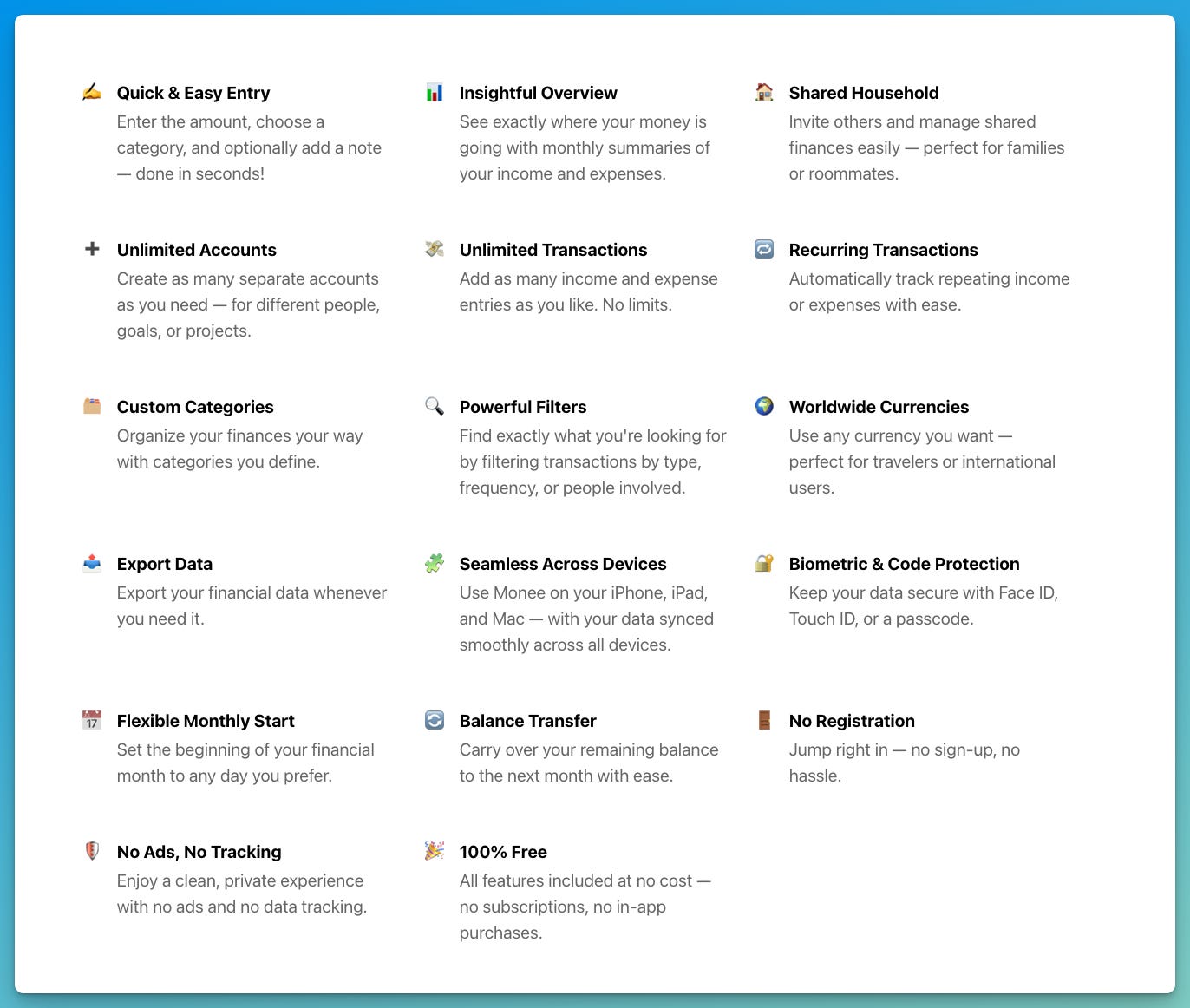
Monee does exactly one thing: manually track income and expenses. No bank account sync, no AI categorization, no automatic import. That’s intentional.
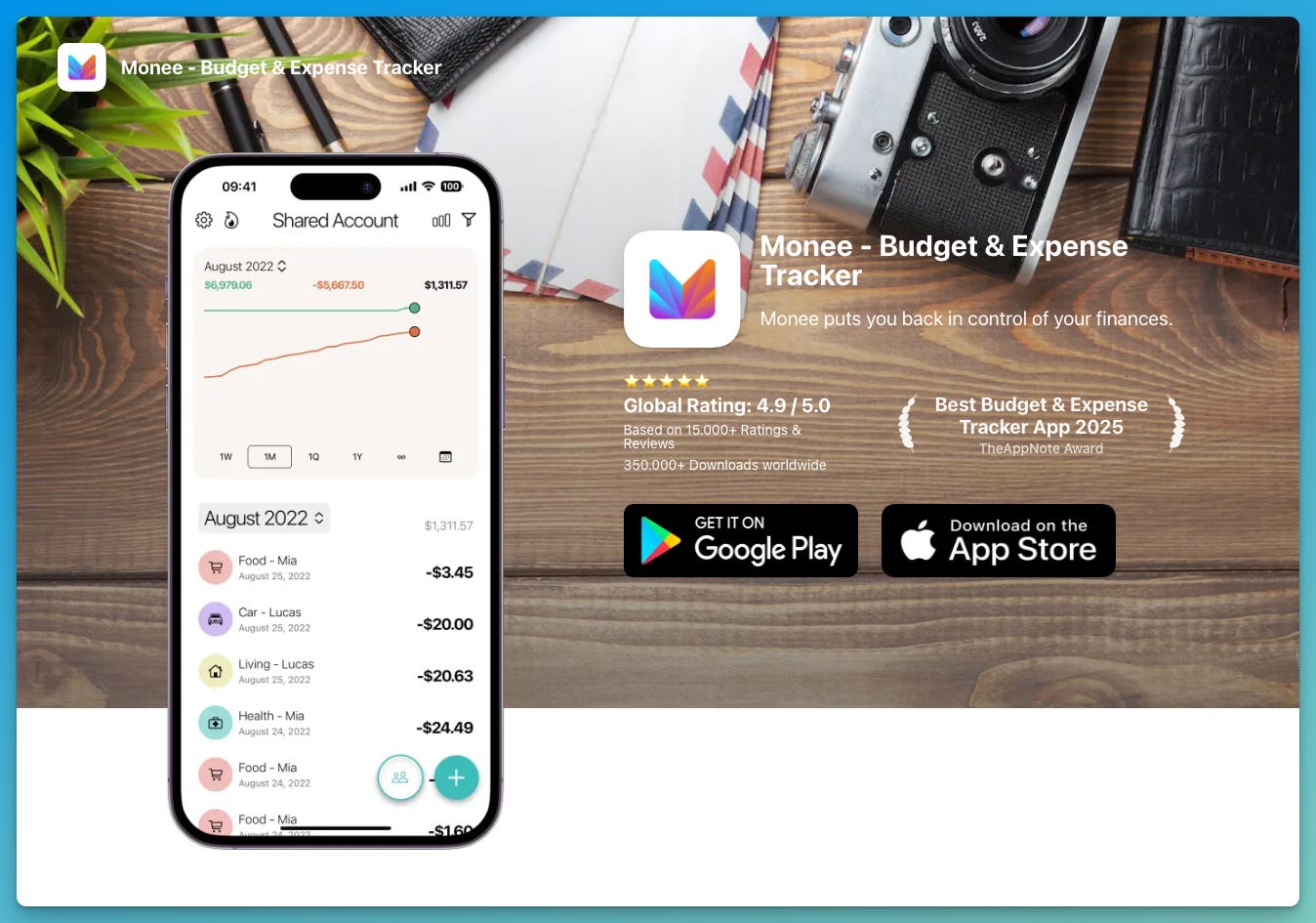
The app launches in a tenth of a second. Tap plus, type in an amount, select a category – done. Stephan built it this way deliberately, because he’s convinced: it can’t be faster than this. When you’re standing at the supermarket checkout, you don’t want to tap through three screens.
“You’re standing at the checkout, you grab your phone – and the entry is done in two to three seconds.”
This year’s roadmap is correspondingly cautious: CSV import, currency conversion, more statistics. Features that strengthen the core promise – without compromising simplicity. Because that’s Stephan’s biggest concern: feature creep. He’s watched other apps in his position become bloated, slower, more error-prone over time. He doesn’t want that.
Monetization: Donations Instead of a Paywall
The open dilemma: the free model is his growth engine – but it makes monetization difficult. Once you’ve grown with a free app, you risk rankings and reviews the moment you put features behind a paywall.
Stephan sought advice – including from Fynn Kliemann, 500 euros for two hours. Money well spent, he says. The most valuable tip came at the end: write to your competitors. He did – and has since found a regular exchange with Timo Stübing, the developer of another household budget app. Conversations between peers walking the same path.
His current approach: a donation feature, just launched. His goal: 500 to 1,000 euros per month that meaningfully ease the household budget. No exit, no funding round, no big acquisition.
No unicorn dream. Just honest bootstrapping.
What Actually Makes the Difference
Stephan puts it plainly: growth doesn’t come from a clever idea or a perfect product from day one. It comes from feedback, from years of listening, from consistent improvement.
Today he receives 20 to 50 emails a day. Anything that isn’t intuitive shows up five times in his inbox within a week – and he changes it. This self-reinforcing system of user feedback and fast iteration is what made Monee what it is today.
His tech stack: Firebase for around €20 per month, Swift for iOS, Kotlin for Android – developed with AI support via Codex, which he’s been using since last October. His second wow moment after ChatGPT.
NEW: The full episode is now also on YouTube (German only):
5 Learnings for Founders
Free can be a business model – at least as a growth strategy. Without a price came the rankings, without rankings came the users, without users none of this would have been possible.
Solve your own problem – Stephan built Monee for himself. That gives you the energy to keep going through the long stretches where nothing seems to happen.
Simplicity is a feature – The fastest input wins. People standing at the checkout don’t have time for complex UIs.
Competitors aren’t enemies – Talking to other app developers has given Stephan more than any outside consultancy.
Feedback is gold – Not as a number, but as a signal. If five people ask the same question, something is unclear – and needs to change immediately.
Happy Bootstrapping is a German podcast where I interview bootstrapped founders, indie hackers, and solopreneurs about their startup journeys.
Over the years, I’ve connected with many successful entrepreneurs who have built e-commerce shops, SaaS platforms, mobile apps, content businesses, or hybrid models.
Furthermore I am a bootstrapper myself and growing my DevOps-as-a-Sercice and Web Operations Company “We Manage”.