

Benjamin Hohlmann didn’t plan Kaffeemacher – he grew into it. A voluntary service in Bolivia, a law degree he never finished, and a job at a Basel coffee house set the course.
Over nearly two decades, he built a company together with his brother Felix: two cafés, a roastery, a coffee school, and two online shops. Around 50 employees, close to €10 million in revenue – and not a single euro spent on advertising.
This is a summary of Episode 164 of the “Happy Bootstrapping” Podcast (German).
A YouTube Channel as the Foundation
In December 2018, the Kaffeemacher YouTube channel had 15 to 20 subscribers. Benjamin made a decision: one video every week, starting now.
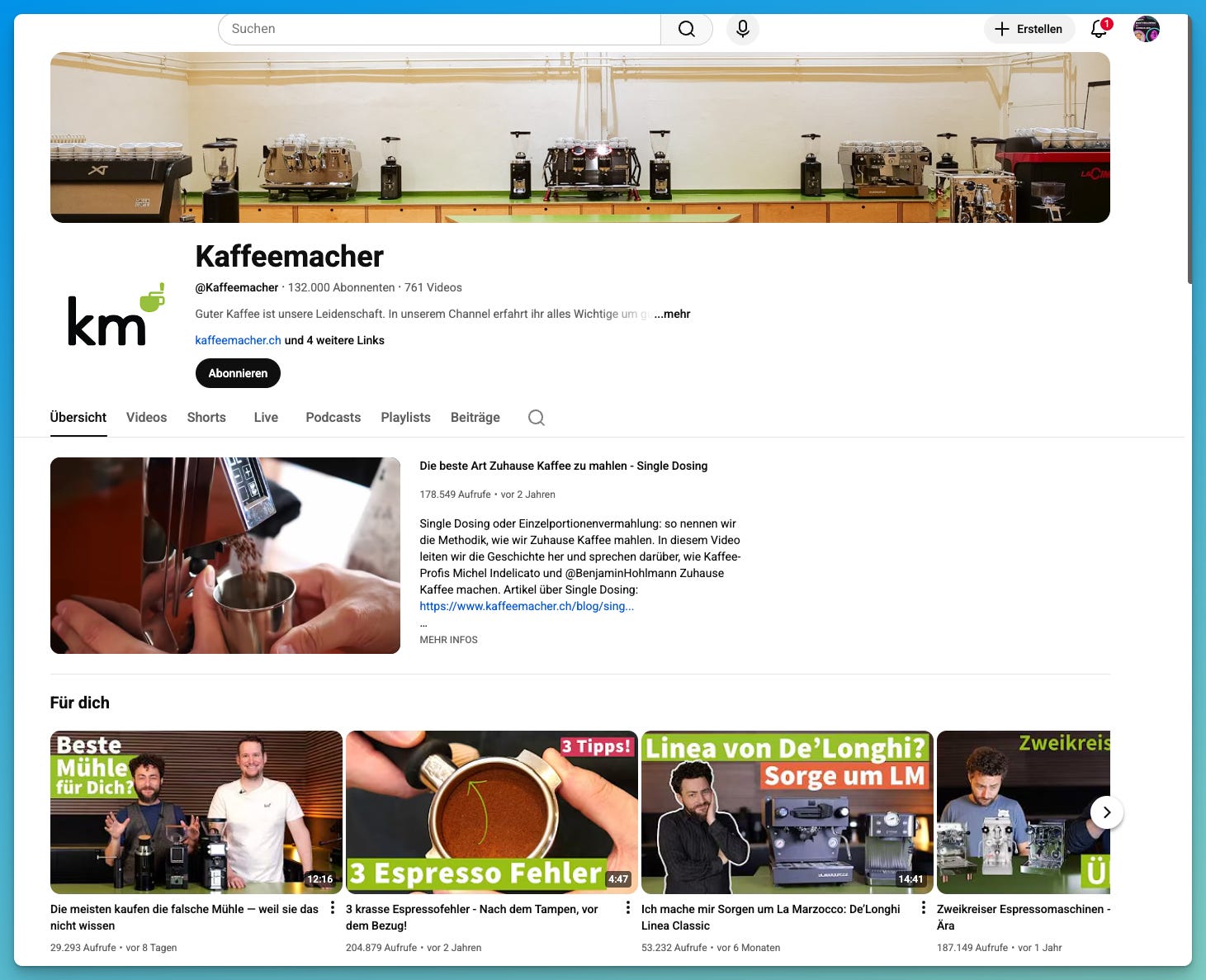
He hasn’t stopped since. Today the channel has 131,000 subscribers, over 500 videos, and 35 million views – with an average watch time of 8.5 minutes per view.
“Without YouTube, our German company simply wouldn’t exist.”
The channel isn’t an end in itself. It’s the primary traffic driver for both online shops. The Swiss shop came first; the German subsidiary followed when order volumes from Germany grew so large that shipping from Switzerland no longer made logistical sense. Benjamin’s brother Florian took over as managing director of the German operation. Today it generates €4 million in revenue – entirely through the online shop.
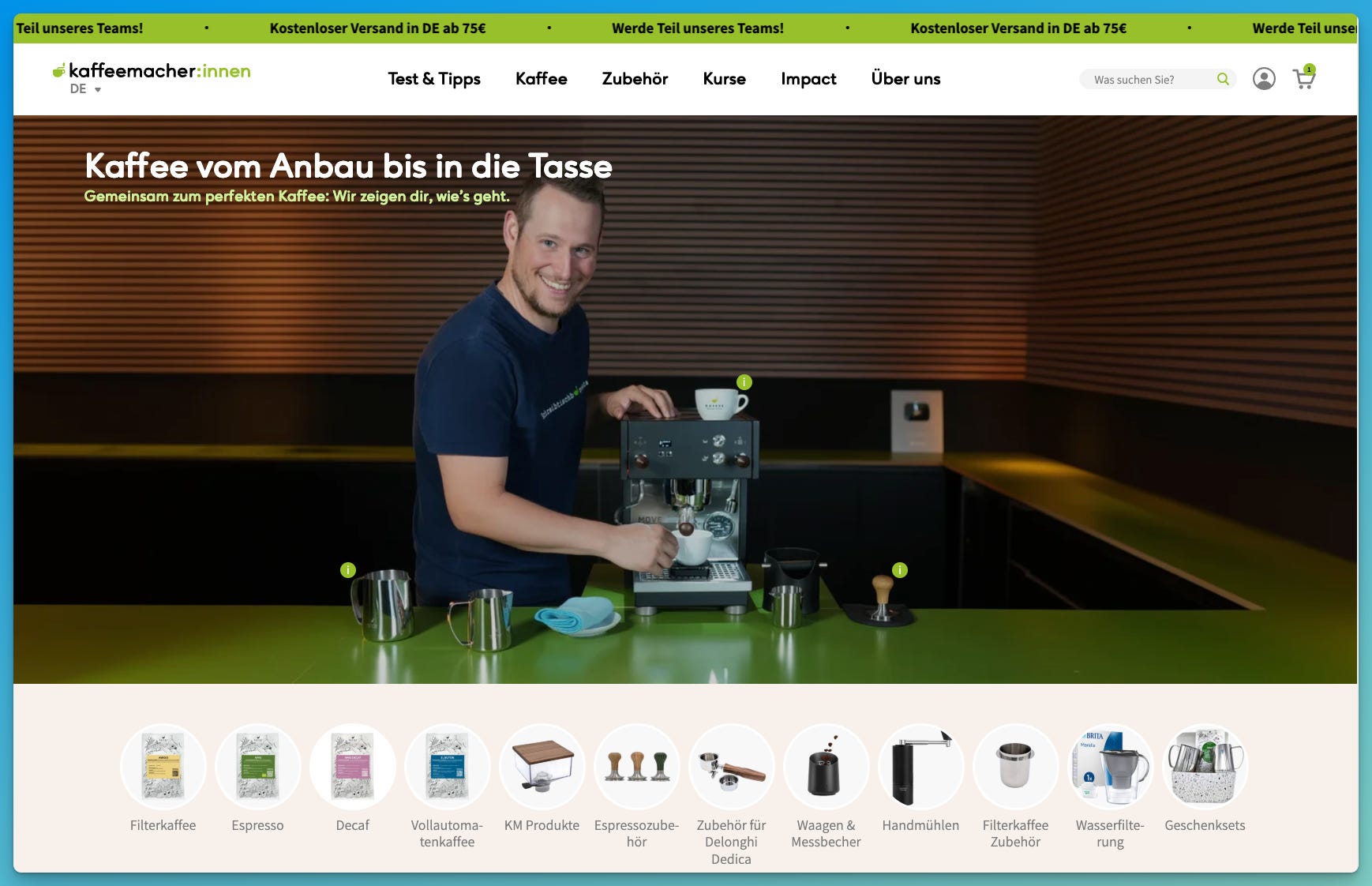
What makes the channel credible is its independence. All test machines are purchased by Kaffeemacher themselves. No manufacturer ever provides equipment for review. YouTube ads are currently switched off. The result: Kaffeemacher has become the largest independent espresso machine testing platform in the German-speaking world, with a 13-page test protocol and university-backed test series.
The combination of YouTube and blog is deliberate. Every video is accompanied by a blog post with the video embedded. When someone arrives via Google and watches the video within the article, their time on page increases significantly. Google reads that as relevance. Video and article end up ranking simultaneously – double visibility, single effort.
From the Roastery to an Expropriated Farm
Kaffeemacher sees itself as a company that manages the full value chain – from origin to cup. Coffee is sourced directly from producers, often through long-term partnerships with farms in Brazil, Mexico, and other growing regions. At the roastery in Basel, every roast is recorded by six sensors and archived digitally.
For eight years, Kaffeemacher also owned a small coffee farm in Nicaragua. That ended abruptly in August 2024, when the Nicaraguan president expropriated 15 kilometres of border territory – including their farm.
Benjamin takes it in his stride. The farm had already been written off, and the experience reinforced his view: roasteries don’t need to own land to have impact. Partnerships built on equal terms are the better model.
“We don’t ask what the price is – we ask what you need for this to work for you.”
This principle runs through all of Kaffeemacher’s sourcing. With an indigenous community in the highlands of Mexico, where they’ve been working for four years, it took four visits just to build genuine trust. Generations of colonial history don’t dissolve with a trade contract.
Purpose Business Without Return Pressure
Kaffeemacher was founded as a purpose business. Profits stay in the company and are reinvested – that’s written into the articles of association. Shares cannot be sold externally. Founders’ shares don’t grow with the company’s value; instead, they can be passed on at nominal value to employees who take on responsibility.
The company is currently in transition: the leadership circle is growing from three to six people, and the model is moving toward employee ownership. Benjamin is deliberately working to make himself dispensable.
“We grow because we want more impact and because we love what we do – not because of any return expectation.”
Annual growth runs at around 25 percent. Faster, says Benjamin, would have meant him and his team falling behind. For him, bootstrapping means more than independence from investors – it means the freedom to grow at a pace that actually works.
NEW: The full episode is now also on YouTube (German only):
Learnings for Founders
Content beats advertising in the long run: A YouTube channel with consistent weekly output can replace an entire marketing budget – if you’re willing to invest years before seeing results.
Video plus blog doubles your visibility: Embedded videos increase time-on-page, which improves Google rankings for both the article and the video simultaneously.
Independence is a business model: Refusing manufacturer deals, declining free equipment, and avoiding sales commissions builds more trust over time than any campaign.
Pace is a strategic choice: Without external return pressure, you can grow at a tempo that fits your team and your culture.
Succession planning starts on day one: Sharing responsibility early and keeping share values nominal creates a company that can outlast its founders.
Happy Bootstrapping is a German podcast where I interview bootstrapped founders, indie hackers, and solopreneurs about their startup journeys.
Over the years, I’ve connected with many successful entrepreneurs who have built e-commerce shops, SaaS platforms, mobile apps, content businesses, or hybrid models.
Furthermore I am a bootstrapper myself and growing my DevOps-as-a-Sercice and Web Operations Company “We Manage”.