

Simon Bauer runs Halleluja Sauna in Erding, near Munich, together with his brothers Ludwig and Anton. The family business builds an infrared sauna that needs no pre-heating, and it develops, manufactures and delivers everything itself. Around €6.4 million in revenue, 20 to 40 saunas a month, almost 35 employees and no investors.
This is a summary of Episode 191 of the “Happy Bootstrapping” Podcast (German).
It Started in Their Father’s Joinery
The story begins in 1998. Simon’s father founds a joinery in Erding specialising in high-end interior fit-outs. Then he is seriously injured in an accident, and for a while the family lives from one day to the next. Simon’s younger brother Anton makes a decision at the time:
“I’m going to build something that’s good for my dad.”
Over several years, Anton and Ludwig study how people around the world invest in recovery. The first prototype is a red light screwed onto a board. The sauna is not designed from the workshop outwards but from the market’s point of view, as all the brothers are working outside the family business at that point. The patent arrives in 2023, and since then the joinery has built only one product.
One Product, Everything In-House
Simon compares the traditional Finnish sauna to a Nokia phone: it does one thing very well but rarely gets used. In his experience, customers with a Finnish sauna use it five to twenty times a year, because heating it up and maintaining it takes effort. The Halleluja Sauna does not heat the room but uses a specific wavelength to warm the body directly, and it combines heat with light, aromas, frequencies and salt mist.
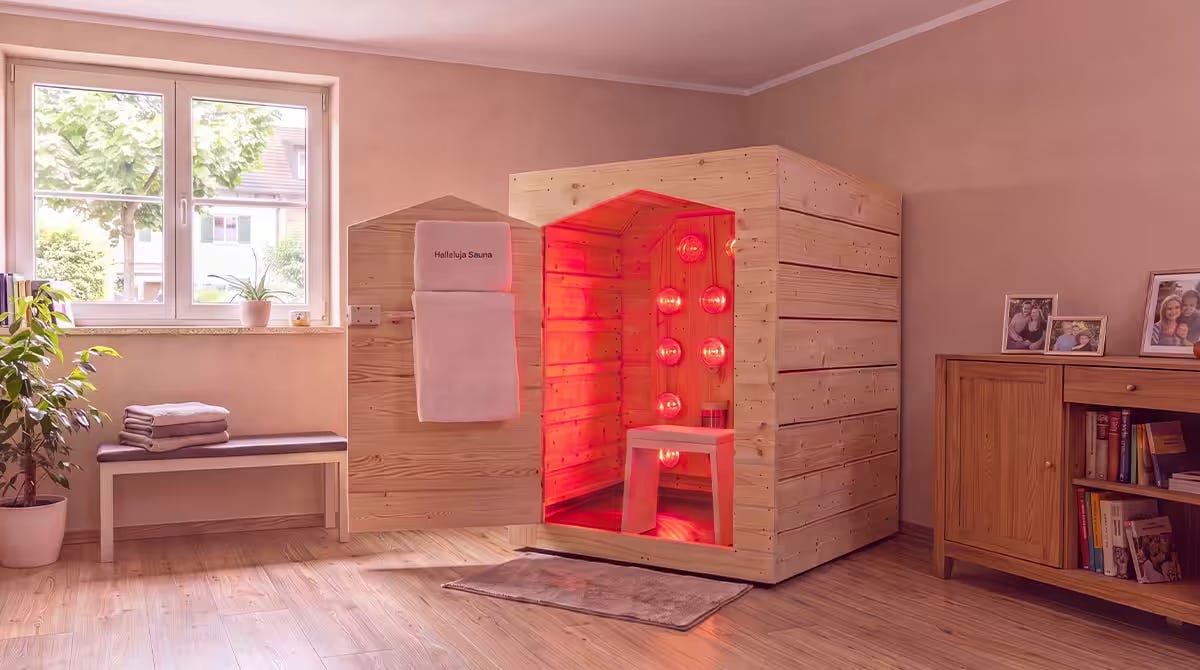
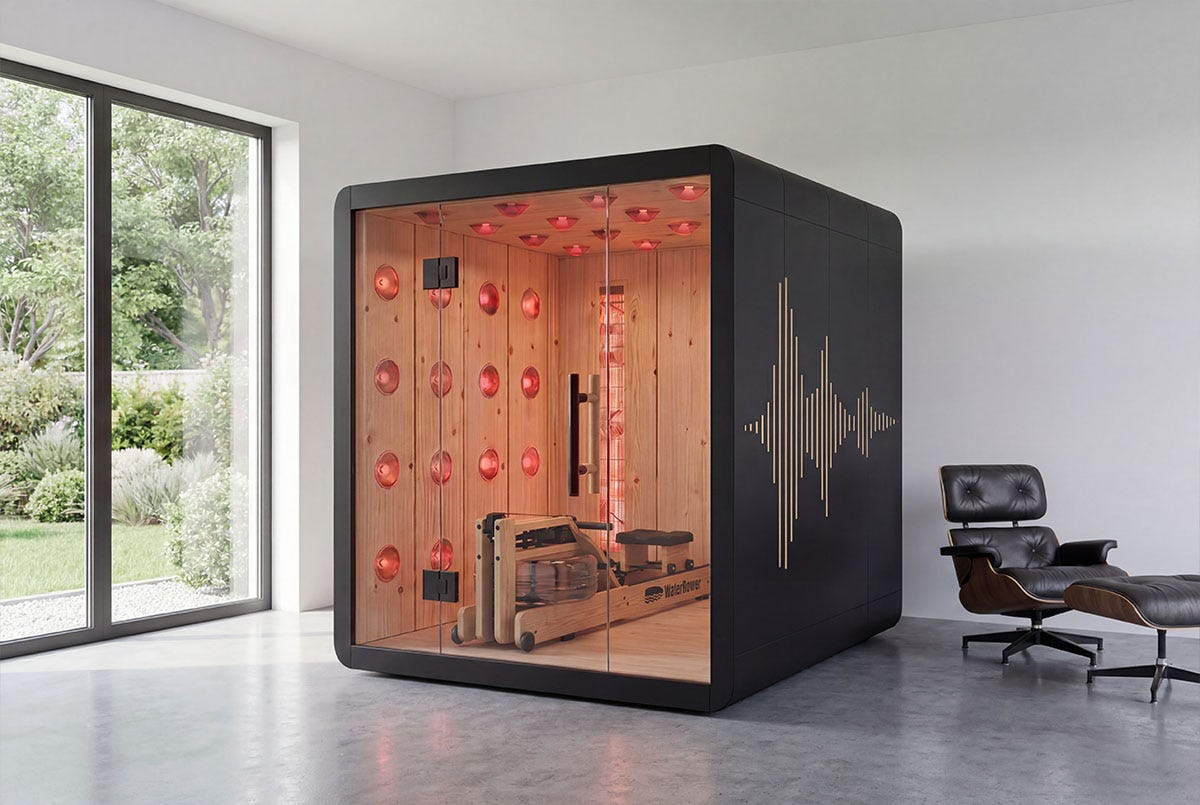
Prices range from just under €18,000 for the entry-level model to €120,000 for a fully equipped Genesis Pro. Orders are financed through deposits, and the waiting time is several months. Research and development, production, marketing, sales and delivery are all handled in-house. The company’s own delivery teams install the saunas at customers’ homes, currently in around ten countries, with the focus on Germany, Austria and Switzerland.
The First Customers Came From the Address Book
At the start there was no CRM, no website, no landing pages and no funnel.
“The first customers came through hard work.”
The Bauers called people they knew. The trust was already there, as the joinery had built a good reputation since 1998. Systems and processes came later.
Today, sales are mainly digital, driven by Meta ads. According to Simon, the budget is well into five figures a month, and in some phases into six. Everything is measured: what does not work gets switched off, what works gets scaled up. Simon reckons a customer needs around 60 touchpoints before buying, including ads, newsletters, podcasts, PR and recommendations.
“Nobody gives a damn what we think. What matters is what the market says.”
Why the Trade Fair Stand Sells More Slowly
The biggest surprise came offline. At a good event with an exclusive stand, Simon spends an hour talking to someone who has never seen the brand before, and then has to chase them afterwards. Online, prospects learn about the product in their own time through ads, newsletters and podcasts, and then arrive with a specific order in mind.
B2B is the second circle: physiotherapy practices, osteopaths and hotels. The main focus, however, is on entrepreneurs, professional athletes and individual households. Some customers have already bought their third sauna, for a holiday home or a second residence.
Bootstrapping and Saying No
Investor requests come in regularly, including from customers who are keen to buy in. The brothers turn them down. Instead of capital, they draw on experience through an advisory board that includes former board members of large corporations.
“We’re not here for the quick money.”
An exit is not on the cards; the goal is a business that lasts for generations. That also means passing up opportunities: a general importer for several world regions is eager to work with them, but for now the Bauers are sticking with no. Their reasoning is that if you only build one product, you can build it really well.
When Growth Hurts
The biggest challenge is not the product but the team. A traditional joinery has become a production operation, and not everyone wants to keep up with that pace. Simon compares it to driving at 300 km/h in the fast lane of the Autobahn. At one point, the team even asked for sales to stop because it was getting too stressful.
“Growing pains can kill you.”
Simon expects the company to have around 50 employees by the end of next year.
What I Learned in the Interview
The founding story here is not the product of a marketing workshop. It comes from a real problem in the family, and in Simon’s view that is exactly what creates the trust customers need for a product in this price bracket.
Digital channels can sell very expensive products. The assumption that people need to touch something like this before buying has only partly held true for Halleluja Sauna.
Growth needs people who come along with it. Bringing the production side of a family business along is much harder than winning new customers.
Full Episode on YouTube (German)
Learnings for Founders
Start with your network before investing in systems and funnels.
Measure every channel and switch off what does not work, even if it feels good.
Do not underestimate how long offline channels such as trade fairs take to close a deal.
Learn to sell and talk to your customers instead of relying on recommendations alone.
Go where your customers are to understand how they think.
Say no more often when an opportunity distracts from your core product.
Happy Bootstrapping is a German podcast where I interview bootstrapped founders, indie hackers, and solopreneurs about their startup journeys.
Over the years, I’ve connected with many successful entrepreneurs who have built e-commerce shops, SaaS platforms, mobile apps, content businesses, or hybrid models.
Furthermore I am a bootstrapper myself and growing my DevOps-as-a-Service and Web Operations Company “We Manage”.