

Ben Kohler is a blended-family dad of four, has spent a quarter century in IT and works a full-time job as an employee. On the side he builds FamilyManager, an app for organising family life. It exists because the market offered him nothing that matched how he actually lives.
This is a summary of Episode 184 of the “Happy Bootstrapping” Podcast (German).
The market’s blind spot
Ben and his partner tried everything on offer. Family Wall, the usual suspects, all of it tested at some point. And every single app carried the same assumption: a family lives in one household, the children live there, end of story. For blended families and separated parents sharing custody, nothing was designed at all.
“Every family app we tested and found still assumes a classic family, the kids live in one household, done. And that simply isn’t the case.”
So Ben started building. First commit in February 2026, written in the hours that were left over: an hour in the morning before the house wakes up, two or three hours in the evening once everyone is asleep. Early on it sometimes ran until three or four in the morning. He has since stopped doing that.
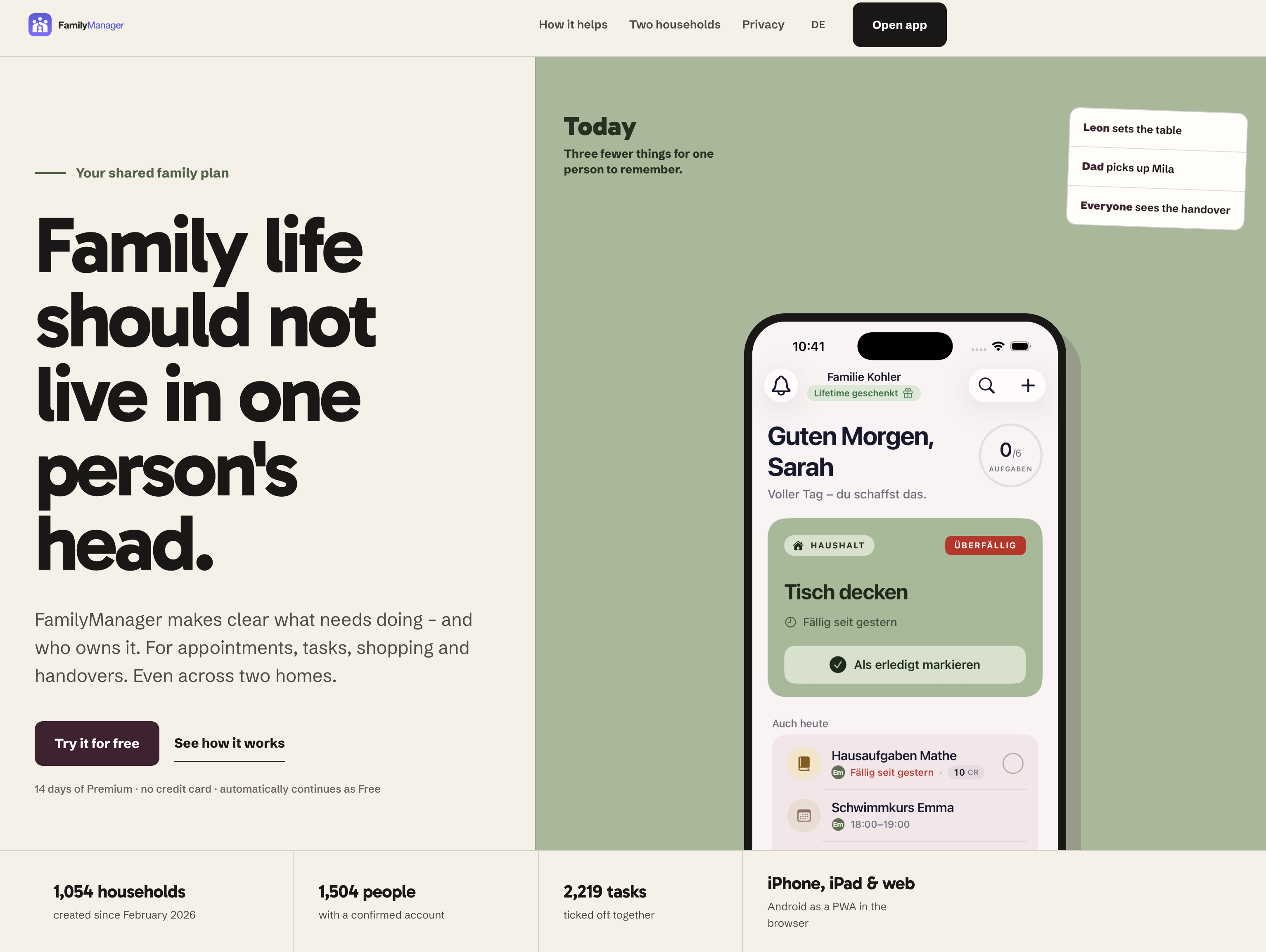
What is interesting is what came out of it. FamilyManager did not stay a niche app for blended families. Calendar, tasks, shopping lists, meal plans, documents, chat and a budget overview work for any household. And by now user groups are signing up that Ben never planned for: couples without children and shared flats. He has built them their own onboarding path. The niche opened the market rather than closing it.
Credits instead of arguments at the kitchen table
The feature that shows the product philosophy best is the credit store. Children earn points by completing tasks, parents decide what each task is worth and what the points can buy. Taking out the bins might be worth ten credits, cleaning the bathroom twenty, because one takes two minutes and the other takes two hours if you do it properly. Fifty credits get you an ice cream, a hundred a trip to the cinema, and if a child desperately wants the 1,200 euro Lego set, the parents simply price it at 5,000.
Originally this was a screen time system. Connecting to Apple’s Screen Time API would have meant a lengthy approval process, so Ben built something more open instead. Across all families there are now more than 600 different rewards stored in these credit stores. He does not define what motivates a family. He only supplies the structure for them to define it themselves.
Encryption as a one-person project
FamilyManager is end-to-end encrypted. In his own database Ben sees nothing but the family name and the email address, everything else is unreadable to him. Hosting sits in Europe, backups run automatically, and there are recovery codes plus a repair mechanism that runs through the second adult in the household.
This is the point where he himself is a little amazed at what is possible today.
“An app like Family Manager would have been almost impossible to build alone three or four years ago, with no funding, with nothing.”
The price he pays is support, which he handles himself, one or two requests a week, plus seven test families who check new versions before release.
Free, subscription, lifetime
The free tier covers a lot: calendar, chat, shopping lists, 100 MB for documents, encryption included. Everything else costs 4.99 euros a month or 34.99 a year, discounted in the first year. On top of that there is a lifetime option at 89.99 euros. A launch discount of 40 euros ran on it and is now expiring.
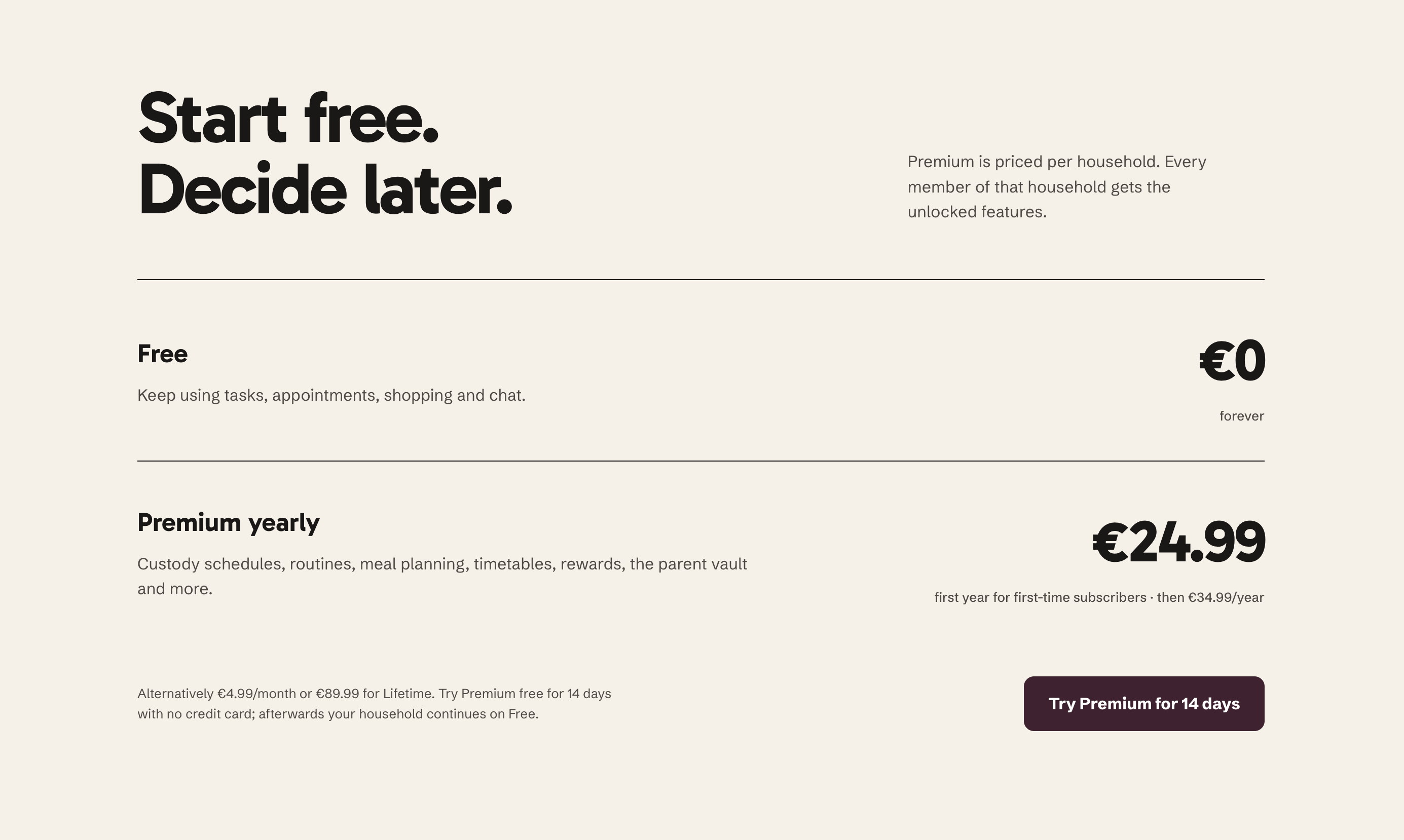
Roughly 95 percent of users never pay. That is precisely why Ben is not running ads yet. At that conversion rate, an advertising budget would mostly buy users who stay on the free tier. First he wants the fourteen free premium days every new account gets to actually make clear what premium can do. Reach becomes worth paying for after that.
Technology is not the problem
Ben develops with heavy AI support, and he draws firm lines. More than 1,500 automated tests run before every merge and every deploy, every pull request goes through two review passes, and database migrations he handles by hand.
“Claude, for instance, can never write to production in my setup. I always do that myself.”
The real gap sits elsewhere. Two articles on iphone-ticker.de lifted new sign-ups from around thirty to between 250 and 300 a week. A week later they were back at thirty.
“If there is one thing we should be getting better at as solo founders, it really is marketing.”
What I learned from this conversation
Your own pain remains the best product filter. Ben did not analyse a market, he used it and kept hitting the same wall.
A sharp niche does not scare anyone off. The fact that FamilyManager is built around two households has not stopped couples and shared flats from signing up.
AI has moved what a single person can build. It has changed nothing about selling. That is the gap a lot of solo founders are sitting in right now.
Learnings for founders
Build for a problem you have yourself. You will see the gap nobody else notices.
A niche is an entry point, not a ceiling. Watch who signs up without being the intended audience.
Lifetime pricing works without running costs. The moment a backend is attached, you need recurring revenue.
Fix conversion before you buy reach. Otherwise you are funding free users.
Press coverage is a spike, not a channel. Plan for what happens after the spike.
Put guardrails where AI can get expensive. No write access to production, migrations by hand.
Happy Bootstrapping is a German podcast where I interview bootstrapped founders, indie hackers, and solopreneurs about their startup journeys.
Over the years, I’ve connected with many successful entrepreneurs who have built e-commerce shops, SaaS platforms, mobile apps, content businesses, or hybrid models.
Furthermore I am a bootstrapper myself and growing my DevOps-as-a-Sercice and Web Operations Company “We Manage”.