

Most indie dev stories follow a familiar pattern: someone quits their job, takes the leap, lives off savings, fights their way to profitability. Dario Digregorio from Rosenheim does it differently.
He works 80 percent as a Flutter developer at Next Level Coffee, helping build the next generation of coffee machines – and uses the rest of his time to develop two apps of his own. No exit plan. No full-time ambitions. And with a calmness that has become rare in the scene.
In episode 167 of Happy Bootstrapping, he explains how YAWA and Apol came to be, why he keeps going at 30€ MRR and 200€ in API costs, and what the best ideas have to do with his dog.
This is a summary of Episode 167 of the “Happy Bootstrapping” Podcast (German).
A weather app that isn’t defined by data
YAWA stands for “Yet Another Weather App” – a wordplay for anyone who still remembers the Java acronym. The name says it all: Dario isn’t trying to build the most precise or feature-rich weather app on the market. His starting point is a different one. The gaming world shaped his thinking – clean, intuitive user interfaces you understand instantly, without a manual, without a jungle of features. That’s exactly what he wanted to bring to a weather app.
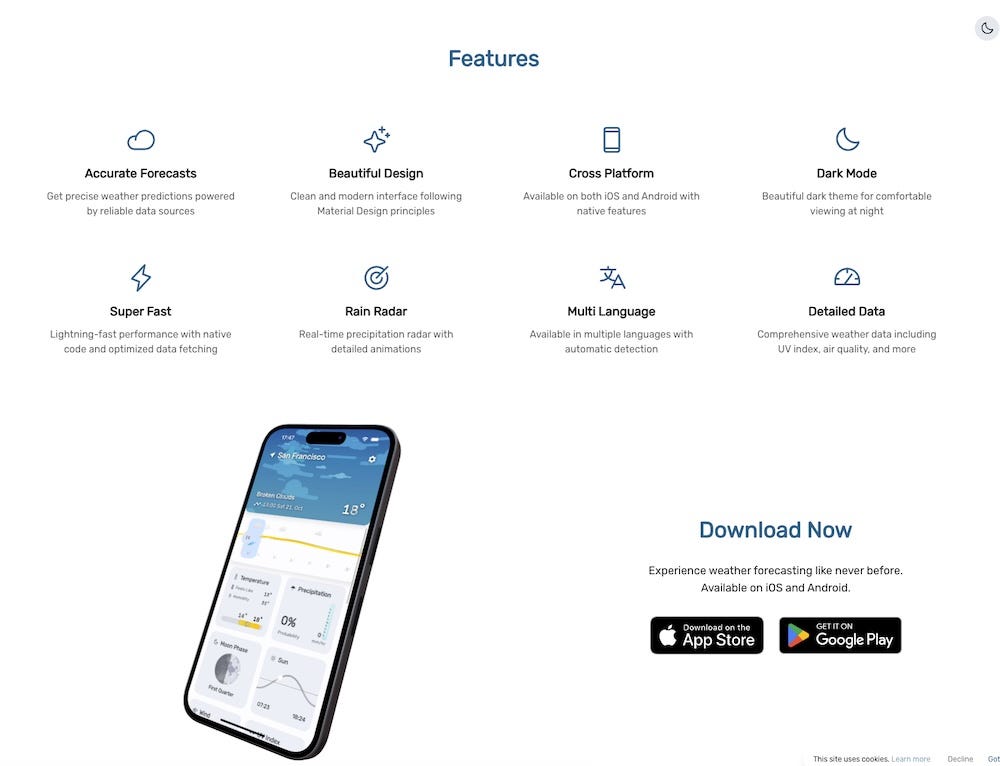
The result is handcrafted animations that make weather conditions visible. If it’s raining harder, you see it. If the wind picks up, the clouds move faster. Nothing is generated, everything is hand-built. YAWA has since collected somewhere between 5,000 and 10,000 downloads. A small, loyal user base that appreciates exactly this approach.
“I thought I’d just start with a weather app because that’s simple and straightforward.”
It turned out to be anything but simple. The weather API eats up around 200€ every month, while subscription revenue sits at about 30€ MRR. Mathematically a losing proposition – one where most people would have pulled the plug a long time ago.
Apol: a debate app spreading to countries Dario never had on his radar
The second app is called Apol – short for “apolar.” On first glance, the concept sounds abstract: users enter a thesis, and AI personas discuss it from different perspectives. You could mistake it for a niche experiment that fizzles out in some German tech bubble.
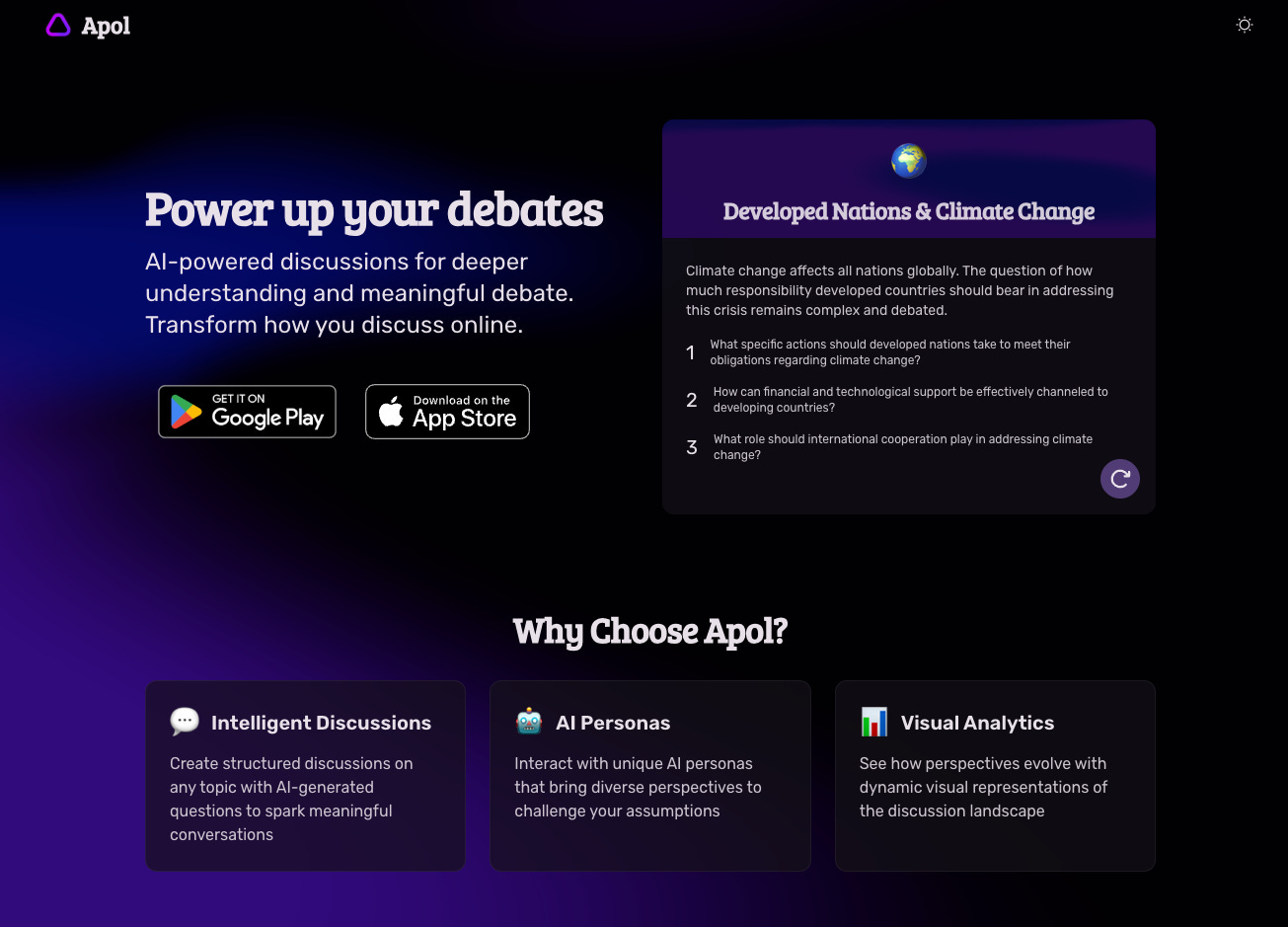
The opposite happened. Apol has reached up to 20,000 downloads and about 1,000 monthly active users – entirely organically, without paid marketing, without a PR campaign. What’s most surprising is where the users come from. Not Germany. Not the US. But China, Russia, Nigeria, and the Philippines. Countries with a strong debate culture, with clubs, competitions, a real competitive drive to find the better argument.
“Apol is growing in corners I never expected – in places where debating is actually a real culture.”
That’s the kind of insight you don’t arrive at by writing market analyses at a desk. It comes from putting an app out there without expectations and watching what happens.
80 percent employed, 20 percent free – and why that’s by design
In theory, Dario could lean more heavily into the apps. He could scale back, quit, take the leap. He consciously chooses not to. The 80 percent role at Next Level Coffee isn’t a compromise for him – it’s the foundation that lets him build the apps the way he wants to build them, without the pressure of having them support him immediately.
He works on them Fridays, Saturdays, Sundays. When he feels like it. When he doesn’t, then he doesn’t. And the best ideas don’t come to him in front of a screen anyway – they come when he’s out walking the dog. This rhythm isn’t a coincidence, it’s the actual product. Dario himself describes his app work as a zen garden. Something you tend to, something you tinker with, something that gives you peace – not something that sits on your neck.
Since he started integrating AI tools into his development workflow, a lot of things move faster. Features that used to eat up entire weekends now take hours. That changes the character of the side project: less grind, more craft.
What’s next – and what explicitly isn’t
The next project is already in the works: a skincare app Dario is building together with his girlfriend. Again on the side, again without a business plan. The goal is modest and clear – ideally the apps should pay for themselves, nothing more. No exit, no acquisition, no pitch deck. If you’re looking for the big win, Dario is the wrong address. If you want to understand how to build software sustainably and joyfully, he’s exactly the right one.
“I want to build cool apps that people actually want to use. They should at least pay for themselves – I don’t need more than that.”
In a scene that often speaks about scaling, ARR growth, and Series A rounds, that’s almost a political statement. And it works – quietly, organically, across 16 countries.
NEW: The full episode is now also on YouTube (German only):
5 Takeaways for Founders
A good job and a side project aren’t mutually exclusive – quite the opposite: the financial safety of employment takes away the pressure that usually kills creative work.
UX can matter more than features. YAWA sells itself through animations, not through data precision – and finds its niche that way.
Organic growth happens in directions you can’t predict. Simply putting it out there and observing is often worth more than any market analysis.
AI tools are fundamentally changing what’s possible for solo developers. What used to take weekends now takes hours.
Not every project needs an exit plan. Some apps are allowed to simply exist because they’re fun – and that’s a legitimate business model.
Happy Bootstrapping is a German podcast where I interview bootstrapped founders, indie hackers, and solopreneurs about their startup journeys.
Over the years, I’ve connected with many successful entrepreneurs who have built e-commerce shops, SaaS platforms, mobile apps, content businesses, or hybrid models.
Furthermore I am a bootstrapper myself and growing my DevOps-as-a-Sercice and Web Operations Company “We Manage”.