

Vanessa Westphal is co-founder of Choosy, which she describes as the most-used meal planning app in the DACH region. The app helps families and individuals plan their week intelligently: recipe suggestions, pantry management, and a smart shopping list – all personalized by taste, nutritional goals, and budget. Last month, the three-person, fully remote team generated €250,000 in revenue.
This is a summary of Episode 163 of the “Happy Bootstrapping” Podcast (German).
The Path There Was Anything But Straight
The team came together through Y Combinator – three people from different cities, without a shared office. Early on, they raised around €500,000 in outside funding and set out on a classic VC growth path. Two years later, they were nearly at zero. The mistake: chasing the wrong metrics, losing focus on the core product, and running a freemium model that consumed resources without giving enough back.
“Free users always cause the most costs, the most support overhead, have the highest expectations, and complain the most.”
The turning point came from a conversation with Holger Harms, then CEO of Blinkist: go bootstrapped, introduce a premium model, and stay relentlessly focused on the product. The team bought back the investor shares – in what Vanessa describes as a fair and uncomplicated process – and rebuilt from there. Since then, the numbers have moved in the right direction. Last month: €250,000 in revenue.
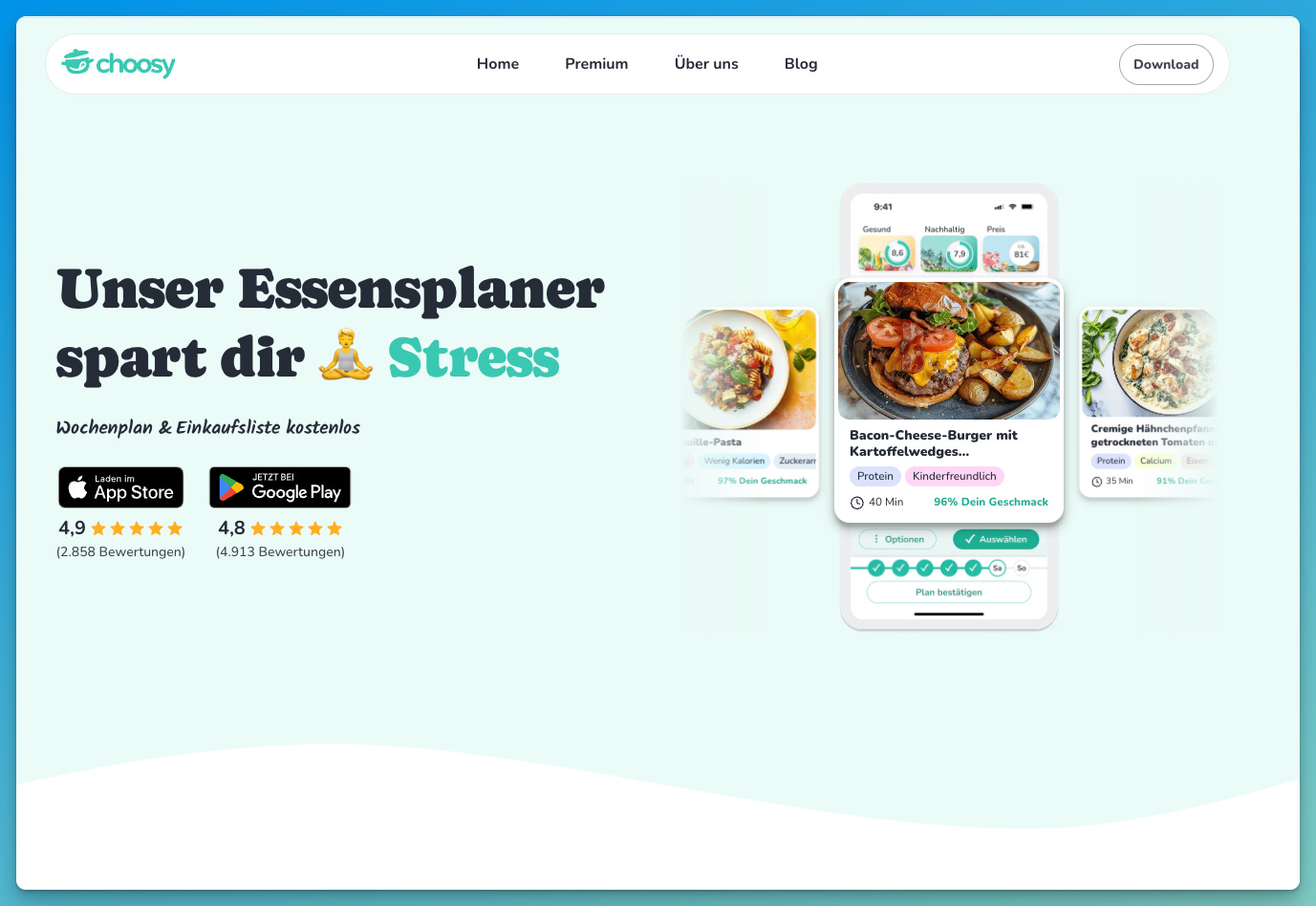
How Choosy Works – and Why It’s More Than a Recipe Book
Choosy plans weeks forward, not backward. The app combines taste preferences, exclusions (useful for picky eaters), nutritional goals, and a budget limit – then generates a weekly plan that reuses ingredients across multiple meals intelligently. Got leftovers in the fridge? Add them, and Choosy factors them in. According to Vanessa, Premium users save up to €1,000 per year as a result.
“The app knows what a recipe costs, knows what can be reused – and keeps you within your budget. This isn’t a calorie tracker, it’s a real planner.”
The premium model comes in three tiers: €6.99 per month, €49.99 per year, or a one-time payment of €139 as a lifetime deal.
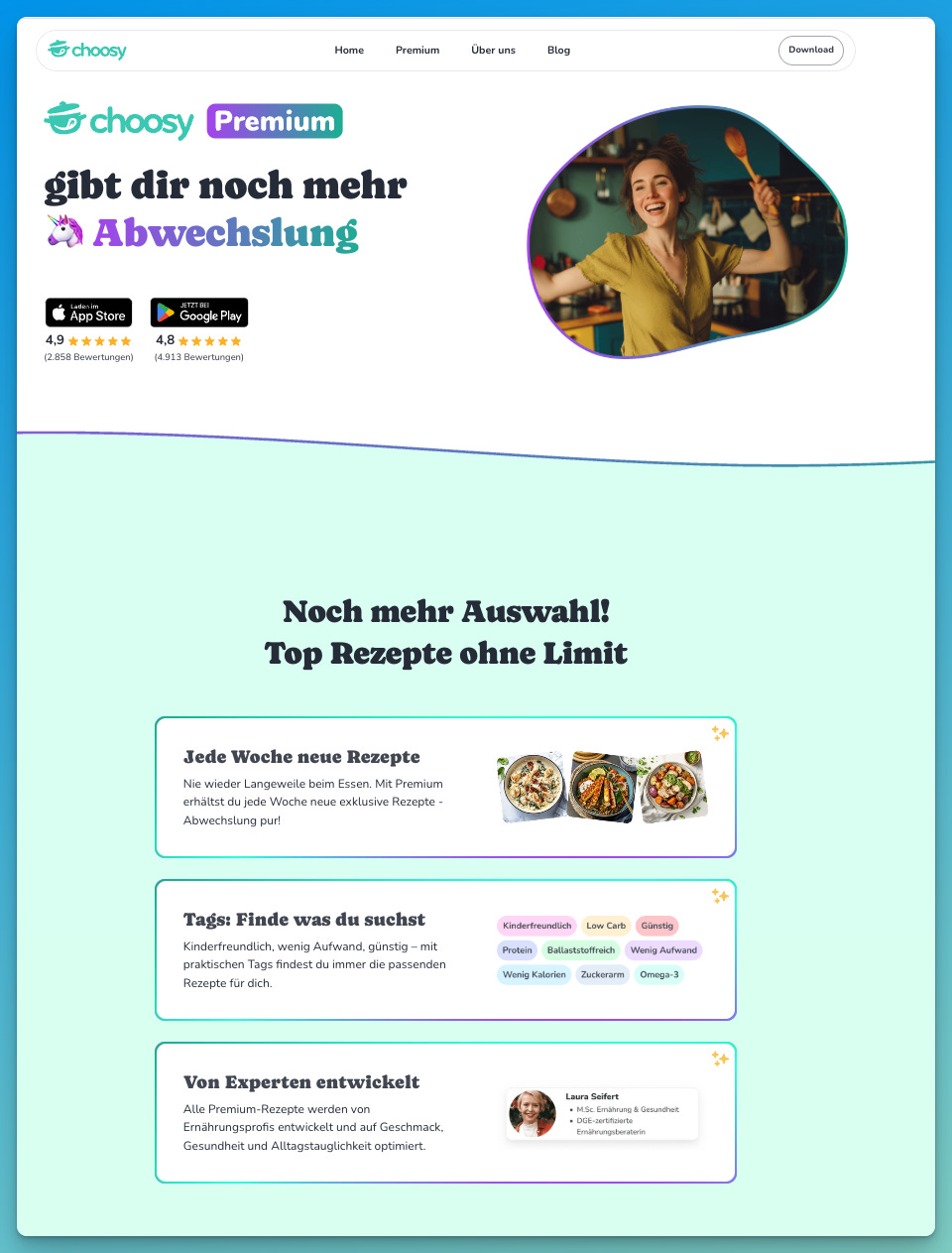
Conversion from free to paid sits at around 10 percent – for comparison, Duolingo, known for its aggressive freemium approach, reportedly achieves just under 5 percent. The lifetime deal has performed surprisingly well: many users prefer a single payment with no ongoing obligation, a preference the team deliberately caters to, even though it generates less recurring revenue over time than an annual subscription.
Distribution: Micro-Influencers, Meta Ads, and Word of Mouth
In the early phase, the team manually reached out to micro-influencers – no fees, purely on a mutual basis. The channel worked because the product solves an everyday problem that’s easy to demonstrate: weekly plan, shopping list, pantry under control. Once you show it once, you already have your audience’s attention. Today, the biggest growth levers are Meta Ads, Google Ads, and organic word of mouth from satisfied users. Brand awareness grew by 150 percent in the last measurement period.
That Choosy has now overtaken Chefkoch in the Google Play Store – without a marketing agency and with a fraction of the resources of an established media company – illustrates what consistent product focus and app store optimization can achieve.
“A great product without any marketing obviously won’t work – but a great product still matters enormously.”
What Comes Next
Choosy is planning expansion into the US market. The decision is strategic: the American market is significantly larger, the app is already available in English, and the meal planning segment is well established there. The team stays small and remote but recently added another tech hire to accelerate product development. The company is structured as a UG based in Bochum. Investor shares have been bought back, and the business runs profitably. Vanessa sees her role as product and growth – and consistently emphasizes that decisions are made when they benefit users, not for the sake of appearances.
The full episode is also on YouTube (german only):
Key Takeaways
Choosy made the move from VC-funded to bootstrapped – and became profitable in the process.
The freemium model was a cost driver; it took a clear premium model for the business to work.
A 10% premium conversion rate shows that paying users validate a product far better than free downloads.
Learnings for Founders
Launch with a paid version from day one. It tells you whether the product has real everyday value – more reliably than any download statistic.
Free users are expensive. Support overhead, infrastructure, expectation management – the costs are real, even when no money changes hands.
App store optimization is underrated. Choosy used it to overtake an established player like Chefkoch without an agency budget.
Small teams can move fast. Three people, remote, no shared office – and still market-leading in a category.
Metrics determine focus. The team tracked the wrong numbers for a long time; the turnaround only came once they measured the right things.
Happy Bootstrapping is a German podcast where I interview bootstrapped founders, indie hackers, and solopreneurs about their startup journeys.
Over the years, I’ve connected with many successful entrepreneurs who have built e-commerce shops, SaaS platforms, mobile apps, content businesses, or hybrid models.
Furthermore I am a bootstrapper myself and growing my DevOps-as-a-Sercice and Web Operations Company “We Manage”.