

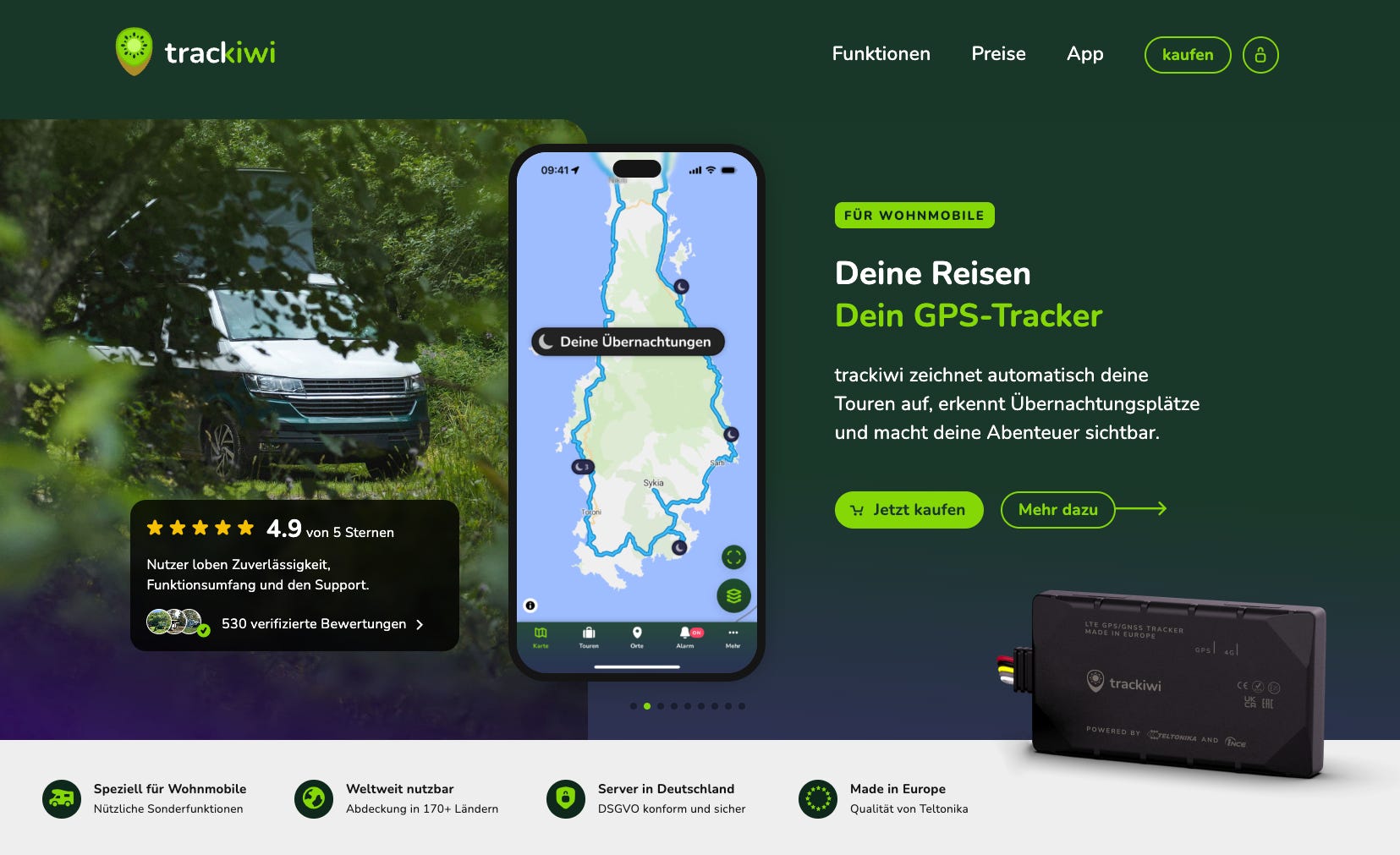
Fabian Schreiber is the founder of trackiwi in Schwäbisch Hall. trackiwi is a GPS tracker built specifically for motorhomes: it records routes, recognises overnight stops and keeps the data as long as the membership runs. The tracker costs €149, plus €60 a year. Fabian’s family now lives off the business.
This is a summary of Episode 193 of the “Happy Bootstrapping” Podcast (German).
Three years in a motorhome
In 2019, Fabian and his now wife gave up their flat in Ludwigsburg. They sold their furniture, bought a 30-year-old Hymer and left: Scandinavia in summer, Portugal or Greece in winter. In the end it turned into three years. Fabian kept working along the way as a freelance web developer.
He brought a Raspberry Pi, a GPS shield and a SIM card with him. Because they rarely stayed anywhere for more than three days, he quickly lost track of where they had already been. So he simply wrote the location data into a database:
“If you drove the route but didn’t record it, then you don’t have it.”
A presale from Greece
On Instagram, the couple had around 4,000 followers from the motorhome scene. Fabian picked 15 beta testers, tested different trackers and ran surveys with 100 to 200 participants each. Then he launched the presale from Greece. Interest was high, but in the end four or five people ordered.
The names on those orders didn’t match the young vanlifers from his own bubble:
“Somehow they were all called Wolfgang or Thomas or Stefan.”
His real audience was older and more willing to pay. Fabian moved from Instagram to Facebook groups about motorhomes and asked the admins whether he was allowed to post. Early on, each customer took him an hour or two of work. That is how the first 20 or 30 customers came together.
One YouTuber and a box full of parcels
The breakthrough came from Hartmut Conrad, known on YouTube as HACO, with around 100,000 subscribers. Fabian sent him a tracker, and HACO mentioned it once. Afterwards, Fabian drove to the parcel locker with a big plastic crate full of trackers.
“And that’s when I realised this influencer marketing approach works incredibly well.”
More YouTubers followed, each with their own affiliate link and discount codes that never expire. Shipping now sits with a fulfilment provider, paid per tracker sent.
Sell the hardware, earn on the membership
Fabian buys the trackers in and builds the software. Most of the hardware margin goes on marketing, discounts and fulfilment.
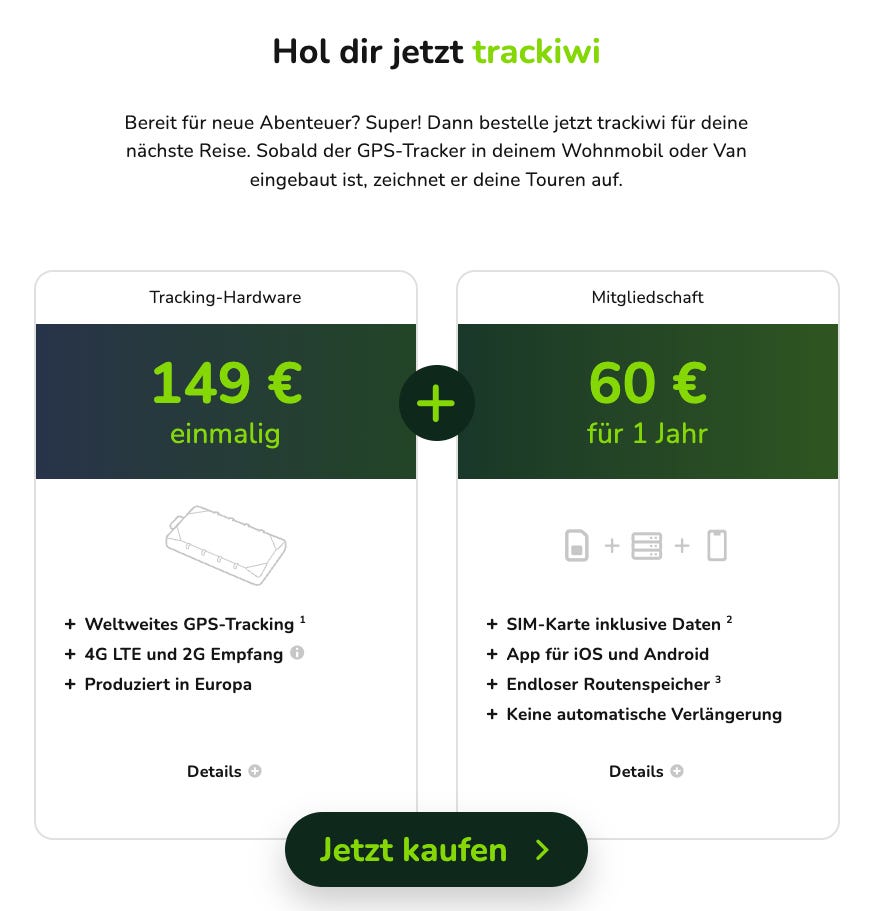
The real business is the membership at €60 a year. It does not renew automatically. A reminder email goes out a week before expiry, and customers book another year themselves.
“Personally, I don’t like these subscription things either.”
Even so, Fabian describes his churn rate as really low. Knowing when each membership ends makes income easy to plan. On the other hand, 600 or 700 devices sit in stock. The manufacturer makes good offers when it needs to hit quarter-end numbers, and that ties up capital.
Support, tech stack and local AI
Fabian still handles support entirely by himself, with two or three phone calls a day. Feature requests go into a list, with a “+1” each time someone asks again.
“It’s a huge amount of work, but it’s also really cool to be that close to the customers.”
The backend is Erlang-based and runs with Postgres on his own root servers in Frankfurt. The website with shop, ticket system and affiliate system is a Laravel project, and the app is built with Ionic and Vue.js. For support, Fabian is testing a MacBook running LM Studio as a local AI, because he doesn’t want to send customer tickets to OpenAI. The backend developer became his first employee and CTO right after we recorded.
From sole trader to GmbH
Fabian started as a sole trader, without pressure or running costs he couldn’t cover. The GmbH, a German limited company, came later. He calls the conversion his real mistake: a retroactive transfer of the business, a balance sheet for the sole proprietorship and the risk of paying tax on the company’s value out of his own pocket.
“And in the end, it’s your own neck on the line.”
What I learned in the interview
Your own bubble is not your target group. Fabian built for people like himself. The buyers were older motorhome owners with bigger budgets, reached through Facebook groups and YouTube rather than Instagram.
You don’t need auto-renewal. Customers have to rebook every year, and they do. The reason is the route data, which people want to look back on years later.
The right influencer beats expensive advertising. A single video filled a crate with orders. A magazine ad was extremely expensive and brought exactly one sale.
Full Episode on YouTube (German)
Learnings for founders
Agreement in a survey is not a purchase; only a presale shows real demand.
The names of your first customers reveal a lot about your target group.
Data that becomes more valuable over time keeps customers without forcing them into a subscription.
Outsource fulfilment early, as soon as you can no longer drive to the parcel locker yourself.
Plan the move into a limited company carefully with your tax adviser.
Doing support yourself costs time, but it gives you the best feature list.
Happy Bootstrapping is a German podcast where I interview bootstrapped founders, indie hackers, and solopreneurs about their startup journeys.
Over the years, I’ve connected with many successful entrepreneurs who have built e-commerce shops, SaaS platforms, mobile apps, content businesses, or hybrid models.
Furthermore I am a bootstrapper myself and growing my DevOps-as-a-Service and Web Operations Company “We Manage”.