

Femke Bohling spent nearly ten years in the ABOUT YOU universe, most recently at its commerce platform SCAYLE. In 2024, she founded THREE.E together with her co-founders – an e-commerce agency based in Hamburg, fully bootstrapped and deliberately kept small.
In episode 181 of Happy Bootstrapping, she talks about an agency model built on execution rather than pretty strategy slides, about an operating system that has been fully shifted to AI, and about the question of what consulting is even still needed for in the AI era.
This is a summary of Episode 181 of the “Happy Bootstrapping” Podcast (German).
From Rocket Internet via SCAYLE to Her Own Agency
Femke’s path runs through several of the defining names in German digital business. After university, she gained her first experience at Rocket Internet and InnoGames before spending almost ten years in the ABOUT YOU world – most recently at the commerce platform SCAYLE, through which ABOUT YOU sells its shop expertise as software to other retailers. During that time she came to know e-commerce not only as a marketer but all the way down into its technical and operational depths.
THREE.E emerged from that circle in 2024. Femke didn’t start the agency alone but together with her co-founders – some of them came directly from the SCAYLE and ABOUT YOU context, while another co-founder she knew privately now owns the operational and commercial backbone. The team has stayed deliberately compact.
“95% Is Execution”: The Philosophy Behind THREE.E
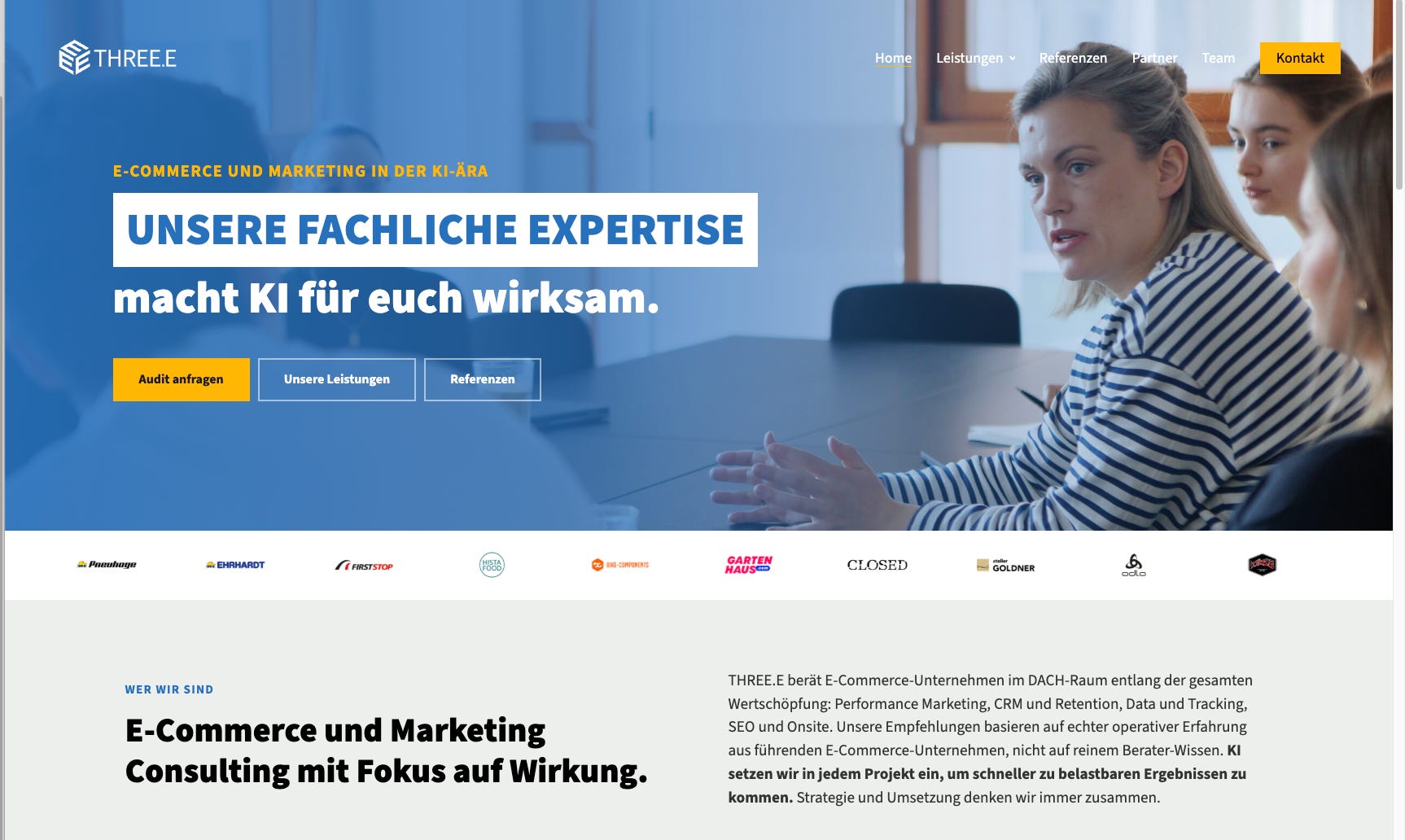
The name THREE.E stands for Expertise, Execution, and Enablement – and the order is no accident. While many agencies make their money with strategy documents, Femke sees the real work somewhere else.
“We always have a slide that says: five percent of the challenge is strategy, ninety-five percent is execution.”
Instead of delivering a nice deck and disappearing again, the team goes all the way into its clients’ operational engine room – brands like Kapten & Son, RYZON, Tom Tailor, MADELEINE, or Gartenhaus, spanning fashion and home & living. The ambition behind it is unusual for an agency: they want to enable the internal teams and ultimately make themselves obsolete, rather than keeping clients permanently dependent.
E-Commerce After the Corona Boom
The market THREE.E works in was heavily distorted by the Corona effect. Many retailers took the sudden online surge to be the new normal and expanded their inventory, fixed costs, and logistics accordingly. Then came the sobering reality: the curve fell back to its familiar level, to the “normal S-curve,” as Femke calls it. What remained were excess stock and structures built for a level that never became permanent. Since then, many projects revolve around the same questions: How do I get rid of the overstock, how do I get back to profitability, how do I refinance the investments from the boom years?
Loyalty Over Discounting
A recurring theme in the conversation is the value of owning customer relationships. Marketplaces let you buy reach, but the valuable data and the direct relationship with the customer stay out of your hands. Femke therefore argues for building your own channels, clean CRM, and an honest look at customer lifetime value. Loyalty, in her view, doesn’t come from the next discount campaign but from relevance – better the right email at the right moment than maximum frequency. Those who truly know their customers have to invest far less in expensively acquired new ones.
An Agency Running on an AI Operating System
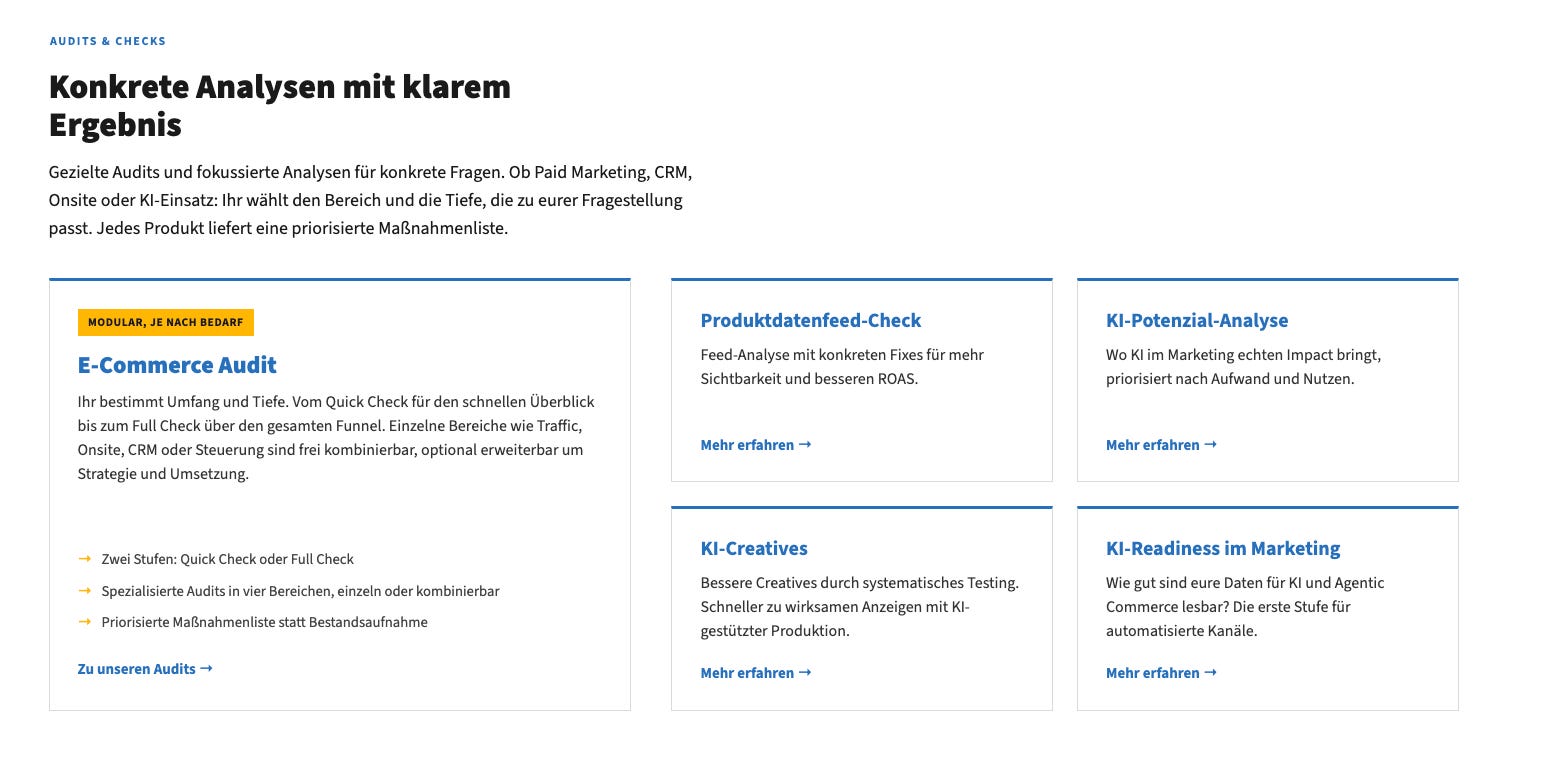
Where THREE.E differs most clearly from classic agencies is in its consistent use of AI. The team has shifted its entire internal operating system to AI – from image, ad, and content creation to analyses that used to require specialized tools or dedicated analysts: attribution models, marketing-mix modeling, click-path analysis.
“It makes us more efficient, it improves our quality, and it simply expands the range of things we can now do ourselves.”
In concrete terms, this makes audits, for example, around 30 percent cheaper. That puts the uncomfortable question on the table that the whole industry is grappling with: if the machine takes over so much, what is the agency even still needed for? Femke’s answer is clear: for experience and judgment. AI delivers analysis and raw material; the difference is made by the people who can assess what actually matters. She stays sober about the GEO hype, too – not every trend belongs right at the top of the roadmap.
Bootstrapped, Boutique, and Deliberately Different
As much as THREE.E leans on efficiency, the agency stays deliberately small. Femke founded the company with two children and doesn’t want to build a business that only works through loud hustle culture. For her, growth is not an end in itself.
“I optimize for satisfaction, not for money. Which, I think, is something you can only say once you already have enough money.”
That attitude is part of the business model: a profitable boutique agency that steers its own size rather than chasing it – and that wants to show founding is possible without self-exploitation.
What I Took Away from the Interview
What impressed me most was how calmly Femke uses AI: not as a marketing buzzword, but as a lever that brings a small team into areas once reserved for big players. And yet she never loses sight of the human side – neither within the team nor with clients. The combination of “95 percent is execution” and “I optimize for satisfaction” is refreshingly honest.
The full episode is now also on YouTube (German only):
Learnings for Founders
Strategy matters, but execution decides – plan less deck, more engine room.
AI doesn’t replace a good team; it expands the range of what a small team can do itself.
Owning your customer data and building real loyalty is worth more than any short-term discount.
Not every hype (see GEO) belongs at the very top of your roadmap.
Growth can be a deliberate choice – boutique and profitable is a valid goal.
Happy Bootstrapping is a German podcast where I interview bootstrapped founders, indie hackers, and solopreneurs about their startup journeys.
Over the years, I’ve connected with many successful entrepreneurs who have built e-commerce shops, SaaS platforms, mobile apps, content businesses, or hybrid models.
Furthermore I am a bootstrapper myself and growing my DevOps-as-a-Sercice and Web Operations Company “We Manage”.